


 Hostinar’s laboratory at UC Davis, the Social Environment & Stress lab (SES Lab), has made several significant empirical contributions to multiple fields. Using rigorous experimental methodology, the lab has discovered several novel and important processes relating to the pathways that link childhood stress to health outcomes, and resilience processes that protect children and adolescents against the deleterious consequences of stress on health. For instance, Hostinar and students in her lab identified resting cardiac autonomic balance as an early marker and predictor of responding to stress with an inflammatory profile, a risk factor for multiple chronic illnesses (Alen, Deer, & Hostinar, 2020, Psychoneuroendocrinology), and longitudinal links among inflammation, adiposity, and working memory (Shields et al., Brain, Behavior, and Immunity- Health, 2021). Secondly, Hostinar’s lab used careful random assignment to stress/no stress and parent social support/no parent social support to show how parents can modulate children’s anxiety, amplifying it or reducing it (Parenteau et al., 2020, Development and Psychopathology). The SES lab at UC Davis broadens our understanding of human development by examining understudied populations such as low-income samples and income disparities in executive function and academic achievement (Deer et al, 2020, Child Development), in addition to studying and studying racial/ethnic disparities in physiology and affect (e.g., Deer et al., 2018, Development and Psychopathology).
Social Environment & Stress (SES) Lab at UC Davis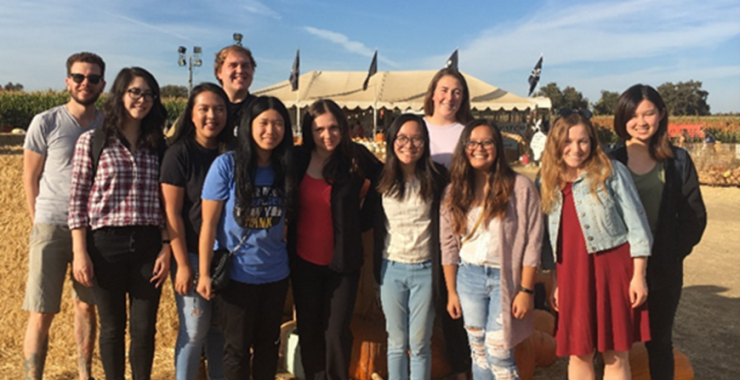
Hostinar has also strived to disseminate developmental science to both academic and non-academic audiences. For instance, she was interviewed by CNNopens in new window regarding the challenges of coping with the pandemic experienced by adolescents and has attended policy summits in California’s State Capitol, where she and other researchers in the UC Davis Center for Poverty Research disseminated the science of poverty to policymakers and youth advocacy groups in the region. In addition, she has given invited talks to governmental agencies involved in promoting healthy youth development (e.g., the California Children's Environmental Health Program and the Yolo County Office of Education). To increase diversity in academia, she also regularly gives professional development talks to the UC Davis Center for Poverty and Inequality summer research program for undergraduate students from Historically Black Colleges and Universities. In addition, she has given talks to local high schools in the Davis-Sacramento area to disseminate developmental science to youth in the Northern California region.
References
Alen, N. V., Deer, L. K., & Hostinar, C. E. (2020). Autonomic nervous system activity predicts increasing serum inflammatory cytokines in children. Psychoneuroendocrinology, 119, 104745. https://doi.org/10.1016/j.psyneuen.2020.104745opens in new window
Deer, L. K., Hastings, P. D., & Hostinar, C. E. (2020). The role of childhood executive function in explaining income disparities in long-term academic achievement. Child Development, 91(5), e1046-e1063. https://doi.org/10.1111/cdev.13383opens in new window
Deer, L. K., Shields, G. S., Ivory, S. L., Hostinar, C. E., & Telzer, E. H. (2018). Racial/ethnic disparities in cortisol diurnal patterns and affect in adolescence. Development and Psychopathology, 30(5), 1977–1993. https://doi.org/10.1017/S0954579418001098opens in new window
Parenteau, A. M., Alen, N. V., Deer, L. K., Nissen, A. T., Luck, A. T. & Hostinar, C. E. (2020). Parenting matters: Parents can reduce or amplify children’s anxiety and cortisol responses to acute stress. Development and Psychopathology, 32(5), 1799–1809. https://doi.org/10.1017/S0954579420001285opens in new window
Shields, G. S., Deer, L. K., Hastings, P. D., & Hostinar, C. E. (2021). Adiposity, inflammation, and working memory: Longitudinal evidence for a vicious cycle. Brain, Behavior, and Immunity-Health, 13, 100202. https://doi.org/10.1016/j.bbih.2021.100202opens in new window