


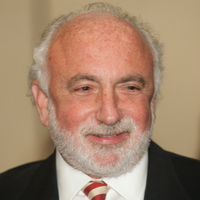
 It is a huge honor to receive the 2023 Award for Distinguished Contribution to Developmental Psychology from Division 7 of APA. As a former president of the division, this recognition is especially meaningful, and I am proud to be associated with the past recipients of this prize, including many of my collaborators and friends, and my Temple University colleague, Nora Newcombe.
My work has focused on adolescent development. Ironically, this lifetime contribution award had formerly been named for G. Stanley Hall, the father of the scientific study of adolescence, and part of my academic pedigree, which begins with William James, Hall’s doctoral advisor, and flows through Joseph Jastrow, Clark Hull, Robert Sears, Richard Alpert (also known as Ram Dass, the author of Be Here Now, a book I highly recommend), and my graduate mentor in Human Development and Family Studies at Cornell, John Hill. His work is not well known today, but in many respects, John was the father of the contemporary study of adolescence.
I ended up studying adolescence entirely serendipitously. Cornell assigned me to be John’s research assistant, and although I had little interest in what he was studying at the time (social cognition), I did learn to love the study of adolescence, and have devoted my career to both basic and applied work on a stage of life I find endlessly fascinating. When I arrived at Cornell, John was finalizing a white paper for the National Institute of Education (the predecessor to the Department of Education) in which he proposed a framework for studying normative adolescent development. That unpublished paper has framed much of my work since that time.
When I arrived at Cornell in 1974, I knew I was interested in personality and social development, but was otherwise directionless. Frankly, the only reason I ended up in grad school at all was that my Vassar apartment mate and close friend, Jay Belsky, suggested it as a back-up plan should I not be accepted into medical school. When the rejection letters began to roll in, I hastily submitted an application to Cornell, where Jay was hoping to enroll. By the time I was finally admitted to med school—in May of my senior year, off the waiting list of the sole med school that had not rejected me—I had made up my mind to go into academic psychology rather than medicine, much to my mother’s horror.
When I decided to leave the department of Child and Family Studies at Wisconsin and take a position at Temple, 35 years ago, I remarked to my mother that for the first time in my career, I was going to be in a psychology department. I explained that my graduate program, at Cornell, my first faculty position in Social Ecology at UC Irvine, and my appointment at Wisconsin were all in non-psychology departments. She paused for a moment and said, half-seriously, “It took me all these years to get used the fact that you’re not a real doctor, and now you’re telling me that you’re not even a real psychologist.”
And in some senses, she was right. My work has always been interdisciplinary, at various times drawing from the fields of evolutionary biology, neuroscience, sociology, education, criminology, public policy, and law. (When he was a teenager, my son Ben once joked that I knew a little about a lot of things and nothing about anything.) I have been less interested in understanding psychological development than in applying lessons from the scientific study of adolescence to social and legal policy, especially in the realms of public health and juvenile justice. My proudest moment was to discover that work I had been doing with Elizabeth Scott, a law professor at Columbia, was cited in the 2005 U.S. Supreme Court decision that abolished the juvenile death penalty.
I have spent much of the past year writing You and Your Adult Child: How to Grow Together in Challenging Timesopens in new window, a book for parents with children in their 20s and 30s, which will be published this April. Although this sounds like a departure from my lifelong focus on adolescence, it is less so than one would think. Much has been said about the impact of the delayed transition of today’s adolescents into adulthood, but prolongation of adolescence has had an enormous impact on their parents, too. Many of the issues that parents grapple with when their kids are teenagers have been shifted to a later point in their family’s life, and parents are confused about how to handle them now that their kids are adults.
When he accepted a lifetime achievement award from SRCD some years ago, my informal mentor, Urie Bronfenbrenner, concluded by saying, “I thank my teachers, my colleagues, and my students.” I have poached Urie’s lines many times over the course of my career, and I hope it is okay to do it again here.