

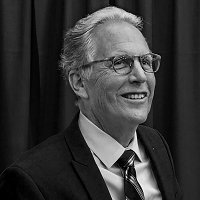
 In 2018, we lost a giant in our field: Tom Dishion, PhD. He was at the height of his career, but his mark on the field is indelible and ongoing.
The vast majority of Tom Dishion’s work was organized within an ecological framework with considerable attention to the linkages between peer and family systems. His research on intervention strategies was informed by and still contributes to an ecological understanding of child and adolescent development. In addition, his contributions to application in both developmental and clinical psychology are unique, cutting-edge and outstanding in terms of their relevance for basic science and to the application of developmental science to important societal issues.
Specifically, Dishion’s research interests over the past three decades focused on applying an ecological framework to understanding the development of problem behavior and mental health problems in children and adolescents and to using this knowledge to design effective prevention and health promotion strategies that are usable in the real world. He published over 400 scientific papers on these topics, mostly involving longitudinal analyses of the development and prevention of problem behavior in youth. In addition, he published several books on family interventions for children’s and adolescents’ problem behavior, a book for parents and one edited book on Coercive Relationship Dynamics. To date, this research has been cited over 33,000 times.
There are at least three unique contributions made by Dishion to the understanding of the ecology of youths’ problem behavior. The first was a series of studies focused on an analysis of deviant peer groups in general and friendships in particular. He found that low levels of parent monitoring, peer rejection and poor academic skills accounted for increases in early adolescent affiliation with deviant peers. He then embarked on a series of studies that identified the processes within adolescent friendships that lead to increasing levels of antisocial behavior, drug use and violence. His work in this area underscores the likely critical impact of adolescent friendships, especially those that emerge from a gang environment accompanied by weak parenting supports.
The second unique scientific contribution was a series of publications focused on the potential for iatrogenic effects in prevention programs that aggregate high-risk youth. He is one of the few intervention scientists who has called attention to the possible negative effects of interventions on youths’ functioning. After randomizing assigning some youths to a cognitive behavior intervention that promoted self-regulation, he found that youths in the intervention actually increased in some forms of problem behavior over a three-year time period. Direct observations of the interactions among youths in the groups indicated that the iatrogenic effects of peer aggregation could be attributed to deviancy training among youths in the unstructured times of the group (entering, break time, leaving) and not to the content of the intervention or interactions during the time that the group leader was in control. He received an award from the Society for Research on Adolescence (SRCD) in 2002 for his work on social policy. This work also led to an SRCD policy report calling attention to a broader literature from criminal justice, education, child welfare and psychology that addresses the potential dangers of policies that aggregate high-risk youth.
Dishion’s third unique contribution comes from research on the design and testing of family interventions. Although there has been considerable research on parenting interventions, Dishion and his collaborators developed a family intervention that could be used in real-world service settings integrating family engagement with family interventions. The Family Check-up model (FCU), which received the 2006 APA award in family psychology, was directly derived from Bill Miller’s Drinker’s Check-up. Dishion received an NIH MERIT award, which helped him to conduct long-term follow-up research on the FCU for over 25 years. This research with adolescents and their families suggested that the FCU reduced substance use over a three-year period that persisted into early adulthood. Collaborations with Daniel Shaw led to studies on the viability of embedding the FCU in welfare services provided to young families. He and his colleagues found that random assignment of families to FCU led to reductions in problem behavior in early childhood and improvements in parental involvement. In a follow-up study that included 731 families with two-year-olds, the FCU was associated with reductions in teachers’ ratings of oppositional behavior at age seven in public schools. This is particularly impressive considering Dishion’s research showing that teachers’ perception of a child being oppositional and difficult at age six through seven is among the best predictors of future delinquent behavior documented by police contact in adolescence. Dishion followed up this sample at age 16 to evaluate the impact of these effects on early problem behavior and how they translate to reductions in drug use and delinquency in adolescence.
After Dishion left the University of Oregon, he founded and directed the Arizona State University REACH Instituteopens in new window, a highly successful center, focused primarily on the implementation and dissemination of evidence-based programs to children and families. Colleagues at the institute currently have collaborations with community agencies across the United States, as well as in Spain, Netherlands, Sweden and more recently, Israel. In general, his developmental work has contributed to an ecological understanding of child and adolescent development, and his intervention research has influenced practice and policies that benefit youths and families. Dishion made a difference in the lives of children and families all over the world. We are pleased to honor Dishion as our next great leader in the field of developmental psychology.