

Meet APA Division 20’s Postdoctoral Representative
Anastasia Canell
 It is my absolute pleasure to introduce myself as APA Division 20’s newest Postdoctoral Representative. My name is Anastasia Canell (she/her) and I am the current postdoctoral fellow in clinical geropsychology at the Veterans Affairs Bedford Healthcare System in Massachusetts following completion of my pre-doctoral internship at the same site. I earned my PhD. in Counseling Psychology from Lehigh University in 2023 and was fortunate enough to be mentored by the current Division 20 president, Grace Caskie, PhD who introduced me to the incredible community and programming of this division. My clinical and research interests include caregiving, end-of-life issues, dementia care, ageism, geropsychology advocacy, and dismantling barriers to access mental healthcare for marginalized older adults. I have previously served as a student representative of the Council for Professional Geropsychology Training Programs (CoPGTP) and the Geropsychology Specialty Council. I also volunteer with the Alzheimer’s Impact Movement for Congressional Team MA-07 advocating for priority federal and state policies benefiting those affected by neurocognitive disorders. Following my values of community and advocacy within my role as Division 20 postdoctoral representative, I hope to represent postdoctoral fellows as we navigate the transition from graduate students to early career professionals through increased accessible communication and building networks. Thus far within my role, I have taken on the task of becoming the Social Media Executive and currently manage the new Division 20 Instagram page. Give us a follow at: @APADivision20 on Instagram and Facebook for centralized information about Division 20 programming and initiatives! Post-docs, let’s connect!
Navigating burnout and managing self-care as a postdoctoral fellow
By Anastasia Canell
For me, some of the greatest parts of being a postdoctoral fellow are the opportunities to explore our intellectual curiosities and learn from mentors in the field to pursue specialized training. As a postdoctoral fellow, we are granted increased freedom to take risks and develop our own professional identities. If you are as passionate as I am about adult development and aging, I can guess that you are jumping on every single opportunity that comes your way during the postdoc. Learning is fun, and everything is interesting. But wait, our time and energy are limited? Are you sure Beyonce has the same amount of hours in a day?
One of the lessons that I am continuously navigating on postdoc is ‘The Art of Saying No’. Often when we talk about self-care, we think about what else we can add to our already busy schedules to comfort and soothe our souls. I am here to remind you that saying ‘No’, and intentionally taking things off your plate, is a revolutionary act. I am here to remind you of this humbly, as it is something I need to remind myself daily. What are some of the ways that you are learning to balance burnout on postdoc?
Meet APA Division 20’s Graduate Student Representatives
Ben Johnson
 Greetings! My name is Ben Johnson (he/his) and I am a second-year PhD student of Grace Caskie, PhD at Lehigh University’s counseling psychology program. My current research focuses on the methodology of measuring age bias. Specifically, I am interested in better understanding how social desirability may interfere with explicit measures of age bias, as compared to implicit and “indirect” measures of age bias. However, when it comes to clinical work, I have a much broader range of interests, which include palliative care and hospice work, counseling regarding death and dying, and general therapeutic interventions. Outside of my studies, my hobbies are a bit more sporadic. It feels like the change with the seasons, though I have always held baseball and home cooking close to my heart. Typically, if there is a way to get “nerdy” and into the weeds about a topic, I will gravitate towards it! If you would like to reach out to me, email me, I am more than happy to talk.
Tips for advising supervisors and PIs to best support their students and mentees from the perspective of a doctoral student
By Ben Johnson
With only three semesters officially in the books for my doctoral program (and coming straight from my undergraduate degree), I still consider myself to be a newcomer in the field of psychology – let alone geropsychology. As such, I’m not far removed from the raw emotional experiences that accompanied my transition into becoming a graduate student. My hope is that my forthcoming thoughts can help supervisors and PIs better support their mentees during their winding journey.
The first few meetings with my mentor were filled with excitement, curiosity, and the lingering anxiety of the high expectations I had preemptively placed upon myself. All of the previous academic relationships with my past instructors and parents had been transactional in nature: I perform, they praise. Unbeknownst to me at the time, I had developed an inner sense of worth that was based on my performance, not my growth. This mindset weighed heavy on my heart during my first semester, and considering how accomplishment-obsessed the field of academia can be,
the development of my research identity was soaked in self-doubt and perceived incompetencies. However, I can recall a vital moment in my journey in which I nervously awaited a meeting with my professor. During the previous meeting, I was told to find a solution to a problem, and I sat outside their office knowing that I had struggled to meet their request. To my surprise, I wasn’t met with frustration, disappointment, or guilt, rather I was applauded for my effort, thanked for my contribution, and the anxiety I felt for not being able to figure out a solution was validated. From that moment on, I felt like my perceived power differential had subsided and I was able to embrace collaboration without fearing my mistakes and incompetencies.
In essence, my mentor met me where I was at in my journey, and recognized the areas in which I grew. In many ways, accomplishing the task was not important, but it was the knowledge and experience I gained from engaging with the task. While there will be times when the items on the to-do list must get checked off, it is important to highlight the moments when growth can come first. To all the mentors and PIs reading this, I can promise you that your mentees want you to be proud of them more than they want to succeed for you. At times, those concepts can become intertwined, which is why I think it is essential to differentiate between the two in order to best support your mentees on their journey.
Mackenzie Kirby
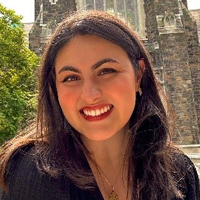 Hello, everyone! My name is Mackenzie Kirby (she/her) and I am incredibly honored and excited to serve APA’s Division 20 as a Graduate Student Representative. Currently, I am a first-year Counseling Psychology PhD, student at Lehigh University under the mentorship of our division’s president, Grace Caskie, PhD. I am originally from Western Maryland and earned my BA in Psychology from Loyola University Maryland. While in the midst of my undergraduate studies, I took on a caregiver role for a dear family member as they coped with their Lewy body dementia diagnosis. This challenging and emotional journey greatly shaped my career path and solidified my passion for helping individuals and families (like my own) navigate the complexities that accompany a dementia diagnosis. After graduating from Loyola, I embraced a role as a Research Program Coordinator at Johns Hopkins University in the Division of Geriatric Medicine, where I worked on research projects dedicated to advancing the field of Alzheimer’s disease and related dementias. My clinical and research interests include geriatric psychology, aging, ageism, Alzheimer’s disease and related dementias, and caregiver support. I would welcome any opportunity to engage with members of Division 20, so please do not hesitate to reach out anytime. As liaisons between members and the Division’s leadership, Ben and I would be happy to lend a listening ear for members’ ideas and concerns. I can be reached through email. Looking forward to connecting with you!
Navigating burnout and managing self-care as a doctoral student
By Mackenzie Kirby
Graduate students (myself included) are often faced with immense and often overwhelming workloads throughout their academic careers. Admittedly, as a first-year, the transition from a typical 9-5 work schedule into the rigorous graduate student schedule was (and still is) quite the adjustment. Our lives are often crammed full of lectures, research projects, advising meetings, graduate assistantships, practicums, and of course the studying and coursework that comes with being a student. Not to mention, the commitments and duties we all have within our personal lives add yet another component for us to juggle. With all of these responsibilities on our plates, it can often feel utterly impossible to find that “work-life balance” we often hear about. Where do we squeeze in moments for peace and joy, especially when this time is often the first to be sacrificed amidst tight work deadlines? Here are three things that I am working towards each week:
- Mental and physical health must be prioritized at the top of the “to-do” list. I recognize that this is often easier said than done, nonetheless, I cannot emphasize enough how important it is to hold yourself accountable when it comes to prioritizing your mental health and physical well-being. In my own experience, I quickly realized that if I do not schedule time to take a break and care for my body, my body decides to take a break for me…often at the most inconvenient times. To avoid burnout, fatigue, or illness, I recommend adding two things to your day. First, schedule 30 minutes of movement. This includes: walking, running, biking, stretching, dancing, etc. - Get creative! There are so many ways to move your body. Find the best movement method for you. Second, try your best to get as close to eight hours of sleep as possible. I know it feels impossible sometimes, but we must not forget to give our brains time to rest too.
- Find time to escape the workload and do what you love. We all have those activities in our lives that spark joy and fill our “happy” buckets. What are yours? For me, it is spending time with the people I love, painting, and curling up with an adventure-filled book. Leisure activities like these boost serotonin levels in our bodies, which is key when avoiding the commonly felt “weekday blues” and “Sunday Scaries.” Remember, you are not alone.
- Be mindful, reflect, and adjust. As graduate students, our schedules are constantly shifting. I encourage you to be mindful of how your body is feeling and what your emotional state is throughout the day, reflect on possible stressors and ways to reduce their impact and do not be afraid to readjust your plans to fit your needs in that moment.