

“True belonging doesn't require us to change who we are; it requires us to BE who we are.” – Brené Brown
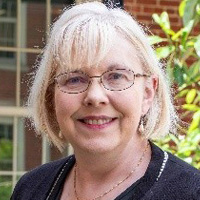 Wow, this year has flown by! Wally, Grace, and everyone I’ve spoken with about being president of APA’s Division 20 told me this would be true. But learning something didactically versus experientially represents two very different facets of understanding. This has certainly been true for me in the development and transformation of my professional identity across my career span. Perhaps that may be true of our field now, as we collectively consider the benefits and drawbacks of combining forces through Division 20 Adult Development and Aging and Division 12, Section II, the Society of Clinical Geropsychology (SCG) becoming one. I’ve been reflecting on my professional identity in this and want to share some thoughts with you now. I will tie this to our current considerations on “merging”.
For those of you I have not had the opportunity to get to know (yet!), I’ve been told many times by mentors, bosses, friends/colleagues, and trainees that I have “ever-present positive energy”. I don’t know about THAT! I do know, though, that I decided late as a college freshman in 1986 that I wanted to become a psychologist rather than a physician. During my sophomore year, I understood that I wanted to be a GERO-psychologist rather than a child psychologist. I had the opportunity to sign on as an undergraduate research assistant in a sleep apnea lab at the University of Kentucky. A different undergraduate professor told me I would make a good professor. Hmmm…
I was married to my first husband, and we “couples matched” to internship at the University of Alabama at Birmingham. I was sorrowful to not pursue my opportunity to train at the Palo Alto VA (thanks, Dolores and Toni!). However, I valued my identity as a wife more than my identity as an intern. Turns out, at UAB I had the opportunity to work with Bill Haley, and that was a real treat! Staying in my Southeastern “neighborhood” also proved advantageous as my father died in November. I took a short leave of absence because I valued my identity as a daughter.
From UAB, I went on to study with my outstanding mentors at Penn State (thank you Steve and Sherry and all Penn State peeps!). I knew I wanted a career with a blend of research and clinical work. I was constantly supported. After that NIMH Penn State Gerontology Center postdoc, back to UAB I went to work with the incomparable Lou Burgio! Y’all know how that turned out across many (many!) years…While I loved my time at the UAB School of Medicine, teaching and training were calling me. I remember the head of Gerontology and Geriatric Medicine asking why in the world I was mentoring undergraduate students in the Psychology Department. So, off to The University of Alabama (UA) Department of Psychology, I went.
I’ve been at UA all my career. I found some of the most cherished working relationships and friendships of my life here. I was as focused and happy as an Assistant Professor could be on the tenure track. With tenure in 2003, I experienced my first significant professional identity slump. It didn’t last long, as there was full professor to achieve, clinical research and training to do, and fun interprofessional collaborative science to implement along with my community partners. Full Professor came in 2010, and a more significant and lasting professional identity slump occurred. I considered leaving UA and pursuing a career within the VA that would still consist of training, clinical work, and research. Some of you (again, you know who you are!) helped me through this professional identity crisis. Now, I’m having the time of my life and engage in meaningful collaborative clinical research. It’s just the best! I’ve mentored 30 PhD students as dissertation chair and had the opportunity to contribute to the professional development of many others across disciplines. I really can’t express my gratitude for this experience across my career span, or the meaningfulness of your contributions to my life. Thank you!
So, what does this personal story tell us about professional identity development, and how might that relate to career span changes as we consider, over time, the possibilities of combining in some new form D20 and SCG? I think three things. First, there is opportunity in every challenge. Anxiety surrounding the future unknown is a part of every facet of life, professionally and personally. We get through these times with mindfulness, self-exploration, doing the hard work, and a little help from our friends. We will find our combined professional identity if we choose to merge, without having to relinquish our core independent identities and values. Second, there are many facets to professional identity, and these necessarily change over time as our field evolves. Certainly, my identity as a person and as a clinical geropsychologist is vastly different in 2026 than it was in 1989 or 2010. Lastly, as Nelson Mandela said, “it always seems impossible, until it is done.” I value my roles and the opportunities I have had through D20 and through SCG. My identity in these professional organizations has overlapping, not redundant, facets. I believe in our collective wisdom and capability of choosing our future course of action. Just as our individual professional identities evolve across the career span, our organizations can also adapt and grow, honoring their past while embracing new possibilities for the future.
Thank you for the opportunity you have given me to be President of APA’s Division 20, Adult Development and Aging. APA 2026 will be vibrant as we explore the themes of Implementation Science, Intergenerational Engagement, and Career Development and Advocacy.