

 Please join me in congratulating our 2021 Division 25 Award Winners! We had many excellent candidates nominated in all categories, and I would like to thank all the nominees and those who nominated them for their participation this year.
Div. 25 has an outstanding roster of early career and senior scientists doing excellent work.
Now, for our winners!
SEAB Applied Dissertation Award
This award recognizes individuals whose recent doctoral research has significantly advanced scientific knowledge in the field of applied behavioral processes.
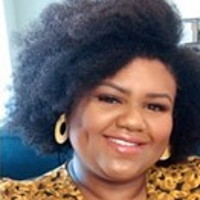 Marlesha Bell, PhD, BCBA
Visiting assistant professor, Department of Psychology, University of the Pacific
Bell completed her PhD in Applied Behavior Analysis from the University of South Florida under the mentorship of Sarah Bloom. Her dissertation explored teaching neurotypical children consent skills via Telehealth. Bell will start her position as an assistant professor in the psychology department at the University of the Pacific in fall 2021. She plans to continue to expand her research in consent education. Additionally, Bell is passionate about reducing systemic barriers related to diversity, equity, and inclusion for BIPOC families receiving behavior analytic service provision and BIPOC students obtaining higher education.
SEAB Basic Dissertation Award
This award recognizes individuals whose recent doctoral research has significantly advanced scientific knowledge in the field of basic behavioral processes.
 Paul Cunningham, PhD
Postdoctoral Research fellow, University of Minnesota
Paul Cunningham received his PhD in psychology at Utah State University under the mentorship of Tim Shahan. His graduate research addressed issues related to the manner in which reward-predictive cues influence foraging-related decisions in non-human animals. For his dissertation, Paul developed a quantitative theory of how searching for information about rewards (i.e., reward-predictive cues) can lead to maladaptive decision-making patterns in pigeons. This theory subsequently informed a set of experiments that explored the conditions in which rats similarly sacrifice reward in order to earn cues that provide information about reward. Paul is currently a postdoctoral researcher at the University of Minnesota under the mentorship of David Redish. He is currently studying how the rodent orbitofrontal cortex participates in reward-guided learning and decision-making.
B.F. Skinner Foundation New Researcher Award—Applied
This award recognizes innovative and important research in behavior analysis conducted within the first 10 years of receiving a doctorate.
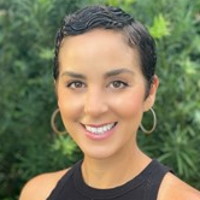 Yanerys León, PhD, BCBA-D
Research assistant professor, University of Miami, Department of Psychology
Co-director, Intensive Behavior Intervention Services Clinic
Director of Applied Research and Behavior Training, UM-NSU CARD
Yanerys León is a research assistant professor in the Department of Psychology (ABA Master’s program), co-director of the Intensive Behavior Intervention Services (IBIS) Clinic, and Director of Applied Research and Behavioral Training at UM-NSU CARD. León began her training in behavior analysis as an undergraduate student at the University of Florida. She earned her master’s degree in Applied Behavior Analysis at the University of Maryland, Baltimore County while working in both clinical and research roles at Kennedy Krieger Institute’s Neurobehavioral Unit. She completed her doctoral training in behavior analysis at the Florida Institute of Technology. In her role as faculty in the ABA Master’s program, León teaches advanced graduate courses in Applied Behavior Analysis. Additionally, León supervises graduate practicum students in the IBIS Severe Behavior Disorders clinic. León’s current research interests can be broadly categorized into the following: (a) refinements and extensions of common behavioral interventions, (b) conditioned social and token reinforcement in application for individuals with ASD and IDD, and (c) technological extensions of behavioral interventions.
B.F. Skinner Foundation New Researcher Award—Basic
This award recognizes innovative and important research in behavior analysis conducted within the first 10 years of receiving a doctorate.
 Meredith Berry, MS, PhD
Assistant professor, Departments of Health Education and Behavior and Psychology, University of Florida
Meredith S. Berry is an assistant professor at the University of Florida in the Departments of Health Education and Behavior and Psychology. She received her BS from the University of Florida, MS from Utah State University, and PhD from the University of Montana. She completed a postdoctoral research fellowship at Johns Hopkins University School of Medicine in the Behavioral Pharmacology Research Unit. As an experimental psychologist, she has several primary areas of research including (1) basic processes of operant reinforcement, learning, memory and behavioral economics often in the context of drug misuse, (2) the evaluation of abuse liability and behavioral and cognitive effects of various drugs, (3) the intersection of human and environmental health, benefits of nature exposure, and environmental conservation. Closely related to her work on the intersection of human and environmental health, she is exploring novel applications of the benefits of nature exposure to issues of drug misuse. Her current focus on clinical drug misuse research stems from a foundation of preclinical and clinical training in behavioral pharmacology, and basic and translational behavioral research in decision-making and behavioral economics. Berry is the recipient of numerous early career scholarship and fellowship awards including awards from the National Institute on Drug Abuse and the National Science Foundation, and her research is frequently covered in popular press news outlets such as Scientific American, Pacific Standard Magazine, Fast Company Magazine, and The Huffington Post.
Med Associates Distinguished Contribution to Basic Behavior Analysis Award
This award recognizes innovative and important research that furthers our understanding of basic behavioral processes.
 Len Green, PhD
Professor of psychological and brain sciences; Professor of economics, Washington University in St. Louis
Len Green, PhD, received his undergraduate degree from the City College of New York (CCNY) and his PhD from the State University of New York at Stony Brook. After completing postdoctoral research, he ventured west of the Mississippi (despite thinking he still was east of the river) where he is professor of psychological and brain sciences and professor of economics at Washington University in St. Louis, as well as director of undergraduate studies.
Len served on the Executive Board of the Society for the Quantitative Analysis of Behavior (SQAB), was president of the Society for the Experimental Analysis of Behavior (SEAB), president of Div. 25 of the American Psychological Association, and editor of the Journal of the Experimental Analysis of Behavior (JEAB). He is a fellow of the Association for Behavior Analysis International (ABAI) and the Association for Psychological Science (APS).
He received the Victor G. Laties Award for lifetime service from the Society for the Experimental Analysis of Behavior (2018), was the inaugural recipient of the Award for Distinguished Contributions to Behavioral Science from the Mid-American Association for Behavior Analysis (October 2019), and received the Society for the Advancement of Behavior Analysis Award for Scientific Translation (2020).
Len’s research concerns choice and decision-making in rats, pigeons, and people, with a particular interest in models of self-control, impulsivity, and choice and decision-making. He is one of the developers of “behavioral economics,” a transdisciplinary field that combines the experimental methodology of psychology with the theoretical constructs of economics. He is co-author of the book Economic Choice Theory: An Experimental Analysis of Animal Behavior, and editor of Advances in Behavioral Economics, the third volume of which is subtitled Substance Use and Abuse. His research has been funded by the National Institutes of Health, National Institute on Aging, and the McDonnell Center for Higher Brain Function.
ABAI Nathan H. Azrin Distinguished Contribution to Applied Behavior Analysis Award
This award recognizes innovative and important research on applications of behavioral principles to address socially significant human behavior.
 Gregory Hanley, PhD, BCBA-D, LABA
Research professor, Western New England University
FTF Behavioral Consulting
Hanley has been applying the principles of learning to improve socially important behaviors of children and adults with and without disabilities for 29 years. He started in direct care and management roles in ICFs/MR (1990–1994), worked on the Neurobehavioral Unit at the Kennedy Krieger Institute (1994–1997), was degreed at the University of Florida (2001), was tenured at the University of Kansas (2006), and developed and directed the Behavior Analysis Doctoral Program and Life Skills Clinic at Western New England University (WNEU; 2007–2019).
Hanley is a fellow of the American Psychological Association (Div. 25), past associate editor of The Behavior Analyst, and past editor of Behavior Analysis in Practice and of the Journal of Applied Behavior Analysis. He has published over 100 articles in peer-reviewed journals and book chapters primarily focused on the assessment, treatment, and prevention of problem behavior and sleep problems, teaching strategies for developing life skills, and empirically-derived values for practitioners.
Hanley currently advises doctoral candidates as a research professor at WNEU, serves as an adjunct professor of psychiatry at the University of Massachusetts Medical School, and leads FTF Behavioral, the international training and consulting group based in Worcester, Massachusetts.
SEAB Don Hake Translational Research Award
This award recognizes distinguished research that bridges the basic/applied continuum of behavior analysis and represents the cross fertilization of both fields.
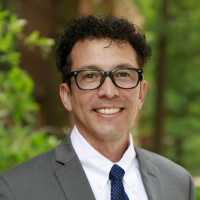 John C. Borrero, PhD
Associate professor, Department of Psychology, University of Maryland, Baltimore County
Borrero received his PhD from the University of Florida, is an associate professor of psychology at UMBC, a Board Certified Behavior Analyst, and licensed in the state of Maryland. At UMBC Borrero directs the Applied Behavior Analysis Master’s track and mentors doctoral students in applied developmental psychology. Borrero has published over 60 articles and chapters and his work has addressed a variety of topics including the assessment and treatment of severe problem behavior, translational laboratory-models of common behavioral interventions, quantitative modeling of behavior, and strategies to promote infant development. Borrero previously served as president of the Maryland Association for Behavior Analysis, as an associate editor for the Journal of Applied Behavior Analysis and Behavior Analysis in Practice, and currently serves as a member of the Board of Directors of the Society for the Experimental Analysis of Behavior.
ABAI Fred S. Keller Behavioral Education Award
This award recognizes an individual for distinguished contributions to educational research and practice.
 Traci Cihon, PhD
Associate professor, Department of Behavior Analysis, The University of North Texas
Cihon received her master’s degree from the University of Nevada-Reno and her PhD from The Ohio State University. Currently, she is an associate professor in the Department of Behavior Analysis at The University of North Texas where she teaches graduate level courses in ethics and behavioral systems analysis and the undergraduate organizational behavior management courses.
Cihon has developed behavioral interventions for individuals with and without disabilities in home and school settings both domestically and internationally. Her scholarship focuses cultural and behavioral systems science, verbal behavior, international and interdisciplinary work, and behavioral education. At UNT, Cihon leads the Culturo-Behavior Science Lab, conducting research that contributes to our understanding of how cultural phenomena develop from a systems and selectionist perspective. She has published multiple articles across various disciplines, and she serves on editorial boards for several peer-reviewed journals including The Analysis of Verbal Behavior, Behavior and Social Issues, Perspectives on Behavior Science, and the American Annals of the Deaf. Recently she has co-edited a special section of Perspectives on Behavior Science focused on cultural and behavioral systems science and co-edited Behavior Science Perspectives on Culture and Community, part of a new ABAI book series—both with Mark Mattaini, and served as the editor for a special section in Behavior and Social Issues on papers developed from the 5th Think Tank on Cultural Analysis. Her current projects include co-editing a book highlighting the roles and perspectives of women in behavior analysis, launching the recently formalized verified course sequence in culturo-behavior science, and preparing to serve as the next editor for Behavior and Social Issues.