


Samuel J. Messick Award for Distinguished Scientific Contributions
 Keith Widaman, PhD, is a distinguished professor emeritus in the Graduate School of Education at the University of California, Riverside. He received his PhD in 1982 from the Ohio State University, with major emphasis in developmental psychology and minor in quantitative psychology. Widaman has extensive experience in the use of multivariate models, including regression analysis, factor analysis, structural equation modeling and the modeling of longitudinal data. His substantive research focuses on family, economic, cultural and genetic influences on child development and the structure and development of mental and everyday abilities in both representative and developmentally disabled populations. He has published extensively in methods-oriented journals such as Psychological Methods, Multivariate Behavioral Research and Applied Psychological Measurement and in substantive journals such as Developmental Psychology, the American Journal on Mental Retardation, Child Development and Intelligence. Widaman has served on the editorial boards of many journals and was editor of Multivariate Behavioral Research from 2011 to 2015. He is a fellow of the American Psychological Association (APA) (Divs. 5, 7 and 33) and the Association for Psychological Science. Widaman received the 1992 Raymond B. Cattell Award for early career contributions to multivariate psychology from the Society of Multivariate Experimental Psychology (SMEP), has twice received the Tanaka Award for best article in SMEP’s journal Multivariate Behavioral Research and is a past president of SMEP. Widaman was president of Div. 5 (Quantitative and Qualitative Methods) of APA for 2013-2014 and currently serves as chair of the Board of Scientific Affairs of APA.
Qualitative Distinguished Scientific Contributions Award
 Frederick J. Wertz, PhD, professor of psychology and interim dean of Fordham College at Lincoln Center of Fordham University, received his PhD in clinical psychology from Duquesne University. He has worked on psychology’s philosophical foundations, history, research methodology, theoretical problems, cultural context and scientific status. Through empirical investigations, he has contributed to the development of phenomenological methods and methodology. He has written about psychoanalysis, cognitive psychology, psychometrics, humanistic psychology and comparative research methodology. He is committed to a psychology that welcomes and promotes critical reflection on the pluralism and unity in psychology and science. He edited The Humanistic Movement: Recovering the Person in Psychology (1994, Gardner Press) and coauthored Five Ways of Doing Qualitative Analysis: Phenomenological Psychology, Grounded Theory, Discourse Analysis, Narrative Research, and Intuitive Inquiry (2011, Guilford Publications). In 2014, he received the Rollo May Award for pioneering scholarship in humanistic psychology, and in 2019 he is receiving the Distinguished Contributions to Qualitative Inquiry Award from the APA. As Council Representative of the Society for Theoretical and Philosophical Psychology, he is currently working on APA’s health care practice guideline policy.
Jacob Cohen Award for Distinguished Contributions to Teaching and Mentoring
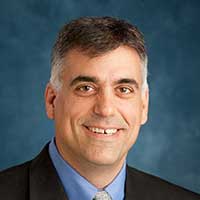 Richard Gonzalez, PhD, is an Amos N. Tversky collegiate professor of psychology and statistics at the University of Michigan. Broadly defined, his research interests are in judgment and decision making. Using a variety of techniques including mathematical modeling, surveys, field observations and experimental lab studies, Gonzalez studies both normative and descriptive decision making. His work has made both methodological contributions and has been used in applied settings, such as product design and medical decision-making.
Distinguished Contributions to Teaching and Mentoring in Qualitative Inquiry Award
 Nancy Deutsch, PhD, is professor at the University of Virginia’s Curry School of Education and direcor of Youth-Nex: the UVA Center to Promote Effective Youth Development. Her research focuses on out-of-school settings for adolescents and the role of youth-adult relationships in positive youth development. She is the author of numerous peer-review manuscripts and book chapters, as well as two books, Pride in the Projects: Teens building identities in urban contexts (NYU Press, 2008) and the co-authored Youth Organizations and Positive Youth Development: Case Studies of Success and Failure (Cambridge University Press, 2011), winner of a SRCD Social Policy Book award. She is the editor of the Journal of Adolescent Research and sits on the editorial board for Qualitative Psychology. She engages in a variety of activities to help translate research to practice, including current membership on the National Mentoring Resource Center’s research advisory board. Her work has been funded by the William T. Grant Foundation, the U.S. Department of Justice and the U.S. Department of Education. She received her BA in English from Vassar College and her PhD in human development and social policy from Northwestern University.
Anne Anastasi Distinguished Early Career Contributions Award
 Dan McNeish, PhD, is an assistant professor of quantitative psychology at Arizona State University. His research focuses on issues in multilevel and structural equation models with challenging data structures, small samples in particular. He has also published on various psychometric topics including reliability, latent variable model fit and dynamic measurement. Along with the current award, these lines of research have been acknowledged with the 2018 Anne Anastasi Dissertation Award from the American Psychological Association (APA), 2019 Rising Star distinction by the Association for Psychological Science (APS), the triennial Early Career Award in Statistics from the American Educational Research Association (AERA) and as the youngest member currently elected to the 65-member Society of Multivariate Experimental Psychology (SMEP). He completed his PhD in measurement and statistics at the University of Maryland under the guidance of Greg Hancock, Jeff Harring and Laura Stapleton in December 2015. He completed his undergraduate studies at Wesleyan University, where he was mentored by Steve Stemler. Prior to Arizona State, he was a research scientist at the Center for Developmental Science at the University of North Carolina at Chapel Hill, under the guidance of Dan Bauer, Patrick Curran and Andrea Hussong, and an assistant professor in the Department of Methodology and Statistics at Utrecht University in the Netherlands.
Distinguished Early Career Contributions in Qualitative Inquiry Awards
 Leeat Granek, PhD, is an associate professor in the School of Health Policy and Management, Faculty of Health at York University in Toronto, Ontario. During the 2018-2019 academic year, Granek was a visiting professor at the Dalla Lana School of Public Health at the University of Toronto in the Social and Behavioural Sciences Division. Her research expertise is in the areas of psycho-oncology, healthcare professional well-being, and grief and loss. Recent awards include the Sigmund Koch Award for Early Contribution to the Field of Psychology from the American Psychological Association. Granek has published more than 70 articles on her research in leading journals including Cancer, Journal of the American Medical Association Archives and Psycho-Oncology. She frequently writes about her research for the mainstream media in outlets such as the New York Times, Slate Magazine and The Huffington Post. In 2017, Granek was named one of the top 40 under 40 researchers by The Marker.
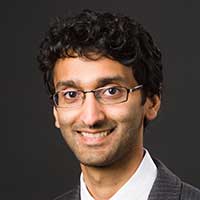 Miraj U. Desai, PhD, is on the faculty of the Program for Recovery and Community Health of the Yale University School of Medicine, Department of Psychiatry. At Yale, he is also a Resident Fellow of Pierson College, a Member of the South Asian Studies Council and Affiliated Faculty in the Climate Change and Health Initiative. His recent book, Travel and Movement in Clinical Psychology: The World Outside the Clinic, features a foreword by Jeffrey Sachs and positions such pressing matters as social justice and racial justice as integral components of good mental health work. Desai was recently awarded the prestigious Yale Center for Clinical Investigation Scholar Award, to conduct a participatory research project on early interventions for depression and social determinants of mental health, in partnership with African American church communities in Connecticut. He was previously awarded a NIMH Supplement for Minority Health and Mental Health Disparities Research for a phenomenological study of culture and person-centered care among Latinx and Asian populations, and his doctoral thesis examined care for autism in India. In 2018, he received the Melba J.T. Vasquez Early Career Award for Distinguished Contributions, from the APA Minority Fellowship Program, who called attention to his “outstanding scientific contributions toward the improved mental and physical well-being of people of color.” He received his MA and PhD from Fordham University and his BA from Miami University, during which he spent time as a visiting student at the University of Cambridge, Selwyn College. He completed his pre and postdoctoral fellowships at Yale.
Anne Anastasi Dissertation Award
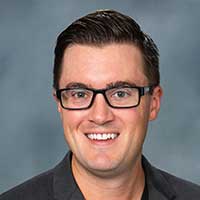 Ross Jacobucci, PhD, is an assistant professor of quantitative psychology at the University of Notre Dame. He received his PhD in psychology from the University of Southern California under the tutelage of Jack McArdle, PhD, and Elizabeth Zelinski, PhD. His research in quantitative methodology has focused on incorporating psychometric models with machine learning (ML) methodology. A large portion of his research has focused on the development and expansion of a method he has termed regularized structural equation modeling, which integrates concepts common in ML with structural equation models. Along similar lines, his dissertation evaluated the use of decision trees, particularly in the generalizability of the resultant tree structures. In addition to his quantitative training, Jacobucci has a broad background in psychology, with specific training in clinical research. This has manifested itself in both past and ongoing projects that have focused on predicting and understanding both suicidal and non-suicidal self-injury.
Distinguished Dissertation in Qualitative Inquiry Award
 James Christopher Head, PhD, is an assistant professor of psychology at the University of West Georgia. He earned a PhD in psychology from the Graduate Center, City University of New York (CUNY). He is an interdisciplinary scholar whose interests include the history of psychology, the philosophy of science, qualitative research, narrative analysis and liberatory pedagogy. His recent research bridges the fields of psychology, sociology and education and has been published in Critical Studies in Education (2019) and Journal of Education Policy (2019). These articles focus on specific aspects of the broader research program presented in his dissertation, TheNarration of Conflicting Accountabilities in the Era of High-Stakes Teacher Evaluation. In his dissertation research, he investigated teachers’ experiential navigation of the introduction of an individualized consequential accountability policy in New York City. Taking a multi-contextual approach, he conducted four distinct narrative analyses, which collectively illuminated how the enactment of this new mode of teacher evaluation is a multi-layered process entangled in embodied, moral, interpersonal, existential, sociopolitical and sociohistorical spheres of meaning-construction. Accordingly, this research expands upon dominant contemporary conceptions of education reform by illuminating the complex psychological consequences for teachers navigating the enactment individualized consequential accountability policies.