


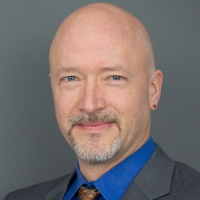
 I was surprised and excited when I learned that I had been elected president of Div. 5. As a researcher, clinician, and teacher, assessment and measurement have always been core to my professional identity. Having worked in various roles in other professional societies, I was enthusiastic to bring the ideas and lessons I had learned back to share with my intellectual “home team.”
Surveying the landscape in 2020 offers quite a contrast to my brimming zeal. Div. 5, like most professional societies, faces challenges of aging membership and fewer students and early career professionals joining. Academic publishing also is going through a seismic change, with open access challenging traditional subscription-based journals, and the European Union and several major funders requiring some form of open access publishing for sponsored research. Major university systems have canceled subscription packages, and publishers are retrenching. Societal challenges to the SAT, GRE, and standardized testing create another tectonic shift threatening test publishers. These changes all threaten the fiscal health of the society, which depends on dues and donations to fund its operations and the grants and awards it makes.
All of these are slow burning crises, challenging the long-term health of societies. COVID-19 was an abrupt blow, literally decimating the global economy, forcing universities and businesses to shut and then pivot to online alternative models, and pushing APA to pivot to an entirely virtual convention for August 2020. The colossal social upheaval triggered by George Floyd’s death completes the set of storms that have swept away any plans for business as usual.
Yet crises are not just threatening; they also can create openings for new ideas and models, and accelerate change. Div. 5 is still standing, and our convention programming continued, albeit in a virtual format. I am impressed and grateful to all the many people who have gone above and beyond the routine contributions. Natalie Koziol’s hard work organizing the convention program paid off, as did Emily Shaw’s work curating the Assessment Student Poster Awards. Heidi Levitt and the Awards Committee organized an amazing ceremony that combined shoutouts from nominators as well as brief remarks from the recipients in a warm, social event that happened live; and was recorded and available online as part of the convention, and on our society website (which President-Elect Alex Beaujean has managed splendidly!). Leona Aiken and the other recipients did fantastic work adapting their presentations. Kurt Geisinger, David MacKinnon, and others recorded their talks as well, and learned how to edit them and post them online. Div. 5 and the Buros institute are hosting a mini-conference on controversies in college admissionsopens in new window that will be even more accessible in the online format.
We are learning, adapting, and devising ways of using them more planfully. Look for many of the recordings to be added to the society web site in the coming weeks. We will experiment with making some available on YouTube opens in new window as well. The new convention program chair, Guillermo Perez Algorta, is an innovator from Uruguay, now a professor in Lancaster, UK; and he is already building a site on the Open Science Frameworkopens in new window (OSF.io) to extend the opportunities to share our work at the 2021 convention. Even if 2021 happens in person or in a hybrid format, we can keep recording our sessions and sharing them with members and with the larger public.
We also will experiment with offering a few webinars and online continuing education events in the coming year. The society has tremendous expertise, and many of our members do highly acclaimed workshops. If all works as planned, then the webinars could be a triple win of reaching a larger audience, raising visibility for the presenter, the work, and the society, and also starting to bring in revenue to support other society initiatives.
There are other ways we can build the reach and impact of the society. The OSF.io platform offers three different ways we can promote our science. OSF.io was designed for open science, storing and sharing code, stimuli, data, and other materials. It also offers a pre-print service, PsyArxiv. OSF also can digitally publish things besides traditional manuscripts. Test authors, data wranglers, and teachers take note: We can put our materials on OSF, register them with their own DOI (Digital Object Identifier), and then adjust how we want to share them. Done in the right sequence, it is possible to have both traditional copyright and a Creative Commons license on the same thing, making it possible to keep ownership (and publish and distribute in traditional outlets) while also increasing access.
The most ambitious experiment will be expanding and improving the information about assessment online. Helping Give Away Psychological Scienceopens in new window (HGAPS.org) is a 501c3 charity I co-founded specifically to bring the best information about psychology directly to the people who would benefit. HGAPS has affiliated student service clubs at a growing number of universities, and a cadre of student and early career editors who are learning how to edit Wikipedia and how to navigate that online community. It has taken time and persistence, and a sense of openness, to figure out ways of sharing information that respect the Wiki culture and avoid self-promotion and other traps. The rewards can be substantial: Wikipedia is the fifth most visited site on the internet, and shows on the first page of hits on Google searches on a topic. It is probably the most powerful way we could raise awareness about psychological assessment and methods. A median psychology page there receives 500,000 to 1,000,000 views, each year.
There is a sister site, also run by the same foundation, Wikiversityopens in new window. Chances are that you have not heard about it—it has a fraction of the traffic that Wikipedia gets. It is meant to be a place to support teaching about topics. We have been very successful using it to teach about statistical methods, such as Receiver Operating Characteristic analysis, as well as building a “technical manual in the cloudopens in new window” to support clinical applications of assessment. The ROC resources have contributed to more than 40 published peer review papers, and the 200-plus pages on assessment have been viewed 275,000 opens in new window times already, so we have excellent proof of concept.
HGAPS has a standing working meetingopens in new window every Thursday evening, 6–8 pm ET (3–5 Pacific), using Zoom and breakout rooms to work on specific projects. Over the coming year, look for invitations to specific events—we will have themed editing parties where we will work on assessment (broadly defined) materials. You all have an open invitation to come and see what’s happening, and HGAPS members would be enthusiastic to help build pages and materials. There’s tremendous synergy pairing your expertise with their energy and editing skills.
The Chinese characters for crisis combine the symbols that mean “danger” and “opportunity.” The calligraphy is almost a visual poem about 2020, perhaps the most disruptive year in memory, and yet we are learning ways to not just survive, but potentially thrive. Our society has much to offer: our tradition as one of the oldest APA divisions and our talents for teaching, research, and application. We have developed methods to measure things that matter, even when they are not easy to directly access; and our toolkit now includes qualitative and quantitative techniques. To the eyes of the public, we are one of psychology’s best kept secrets. 2020 is pushing us out of our comfort zone to explore ways that we may grow our contributions and recognition by an order of magnitude.
Let’s see what we can do together!