


 Division 5 of APA offers eight annual awards to recognize the contribution of members to qualitative and quantitative methods in psychology. Nominations for awards are posted in The Score, the SQIP newsletter, and the Division 5 website. This year, five awards were conferred. Awardees were recognized at the awards ceremony organized by Division 5 and held in conjunction with the APA 2023 Annual Convention.
Qualitative Awards
Committee: James Christopher Head (chair), Linda McMullen, and Deborah Tolman
Distinguished Dissertation in Qualitative Inquiry Award Winner:
Edward D. Scott, Jr., PhD
 Scott’s dissertation, Making Justice: A multimethod qualitative study of activist identity formation and political imagination(s) among Black adolescents, is clear, cohesive, elegant, and compelling. After articulating a past-present-possible conceptual framework, Scott used narrative and arts-based methods to interrogate the intersections of race, youth development, identity, and activism as he examined the sociopolitical development activist identity in adolescents. In the words of Nancy L. Deutsch, Scott employed “rigorous and innovative qualitative methods, in both design and application, resulting in a truly superb dissertation that is a delight to read, is intellectually rigorous, and is an exemplar of qualitative methods.”
Distinguished Early Career Contributions in Qualitative Inquiry Award Winner:
Roberto Luis Abreu, PhD
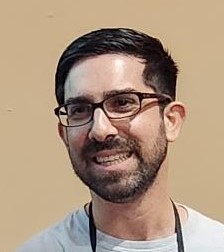 Since earning his PhD in 2018, Roberto Luis Abreu has made valuable contributions to qualitative inquiry through his scholarship and teaching. He has published extensively, has received many awards for his scholarship, and promotes qualitative inquiry in a variety of scholarly communities. In the words of Heidi Levitt, PhD, Abreu “is a committed scientist-practitioner-advocate who has advanced qualitative methods and already is invested in contributing towards future generations of qualitative and mixed methods researchers.”
Quantitative Awards
Committee: Qiwei He (chair), Emily Shaw and Rochelle Michel, with support from David Budescu and Amy Schmidt
Anne Anastasi Dissertation Award Winner:
Kenneth Tyler Wilcox , PhD
 Kenneth Tyler Wilcox received his PhD in 2022 from University of Notre Dame in Quantitative Psychology. His dissertation, Jointly modeling participant-level data and summary statistics for treatment, is novel and important. His developed Bayesian modeling approaches for cumulative data analysis using both participant-level data and aggregated data significantly adds to the literature of cumulative data analysis methodology. Wilcox’s dissertation is of high practical implication to enable psychologists to better utilize all available quantitative information for cumulative data analysis. His dissertation well presents far-reaching method in terms of utility across disciplines and has been published in top-tier journals such as Psychological Methods and Multivariate Behavioral Research. In addition, Wilcox also extends his dissertation work to two promising new research lines in topic modeling and text mining.
Anne Anastasi Distinguished Early Career Contribution Award:
Heining Cham, PhD
 Cham received his PhD in 2013 in Psychology in Quantitative Research Methods from Arizona State University and is currently Associate Professor (with tenure), of Psychometrics and Quantitative Psychology, in the Department of Psychology at Fordham University. Since completing his doctoral studies, he has made numerous important contributions to the field of quantitative psychology and beyond. Cham’s quantitative research contributions focus on quasi-experimental design and causal inference and latent variable interactions. Running through his research in both areas is a focus on the critical issue of the impact of missing data on the behavior of statistical estimation procedures. Cham’s reach in quantitative methods goes well beyond his core quantitative methods focus. He is also a prolific collaborator, and with substantive colleagues, has made important contributions to research including advanced research design, statistics and assessment methodology in service of answering critical questions concerning health, mental health, and human development.
Jacob Cohen Award for Distinguished Contributions to Teaching and Mentoring:
Viji Sathy, PhD
 Viji Sathy, PhD is Associate Dean for Evaluation and Assessment, Office of Undergraduate Education, College of Arts & Sciences, and Professor of the Practice of Psychology and Neuroscience in University of North Carolina at Chapel Hill. Sathy has made unique and outstanding contributions to the teaching and mentoring of quantitative psychology through her scholarship and practice. She has provided high quality teaching in hundreds of statistics and research methods courses; created high structure, active learning environments; mentored large graduate student teams of teaching assistants; and successfully engaged colleagues in teaching practice to celebrates classroom diversity and ensures that students with different backgrounds are included in the learning process. Her contributions are both micro and macro with a broad impact not only to her over thousands of students but also the entire field. Over her career starting in quantitative psychology and broadening to the scholarship of inclusive teaching and learning, Sathy made numerous clear and outstanding professional contributions that broadly affect how professors teach (including statistics and research methods) and our understanding of how diverse students are supported in our measurement and statistics courses, and has been successfully, thoughtfully, and innovatively doing so. Sathy brings the best practices and evidence from educational research in pedagogy to her classroom and guides students through the learning process with her best care.
Note
No nominations were received for the Samuel J. Messick Award for Distinguished Scientific Contributions, the Distinguished Contributions in Qualitative Inquiry Award, or the Distinguished Contributions to Teaching and Mentoring in Qualitative Inquiry Award.
Next Year’s Awards
The deadline for next years’ awards will be the first Monday in December (December 4, 2023). I encourage you to mark your calendars, spread the word, and consider nominating a recent graduate, early career professional, or other well-deserving colleague.