


Division 5 offers nine prestigious awards honoring outstanding contributions in the areas of quantitative, qualitative, and mixed methods in psychology. In August, we gathered at the APA convention in Denver to honor the individuals who received our division’s awards this year. As chair of the Division 5 Awards Committee, it was a pleasure to publicly recognize their impressive work and to acknowledge their nominators, as well.
I’d like to thank the other members of the Division 5 Awards Committee, including Deborah Tolman, Donald Brown, Pani Farvid, Qiwei He, and Amy Elizabeth Schmidt. I appreciate the thoughtful care and consideration they brought to this work. Additional thanks goes to our previous Division 5 president, Rachel Fouladi, for her guidance and support throughout the awards process.
Please join me in congratulating our 2025 Division 5 award winners and learning more about them.
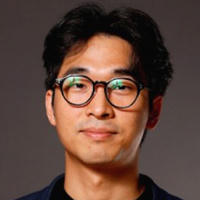 The Anne Anastasi Dissertation Award recognizes distinguished dissertations that address a topic in the field of quantitative research methods (assessment, evaluation, measurement, statistics). This year’s award goes to Gyeongcheol Cho, PhD, at Ohio State University.
Cho’s dissertation, Constructs May or May Not Be Latent: Studies on Two Domains of Structural Equation Modeling, presents important methodological contributions to two domains of structural equation modelling (SEM): factor-based and component-based. This work offers researchers validated tools to better capture the complexities of human behavior and psychology within the SEM framework, allowing for more nuanced and effective use of SEM in psychology. His methods improve SEM’s data-analytic capabilities and further its adoption by researchers and practitioners across various sciences as a main statistical methodology. It is also notable that he developed a free stand-alone SEM software program, based on his dissertation work, available to all.
 The Distinguished Dissertation in Qualitative Inquiry Award recognizes distinguished dissertations that addressed a topic in the field of qualitative research methods. This year’s award goes to Leo Kiralla, PhD, at Bellevue College.
Kiralla’s dissertation, Recognition and The Embedded Self: Rhythmicity, Responsibility, and Paradox in Adult Monozygotic Twins, studies how monozygotic twins navigate psychological and existential challenges in navigating the binary of individuation and maintaining connection. It is highly innovative in both its question and its methodology. In his nomination, Mark Freeman described Kiralla’s dissertation as “a potentially groundbreaking effort,” including a literature review…that serves as a model for literature reviews in qualitative inquiry.” Ruthellen Josselson, who chaired the dissertation, provided an additional letter, stating, “In its range, depth, insight, sophistication, creativity and writing, this is simply the best dissertation I have ever chaired.”
 The Anne Anastasi Distinguished Early Career Contributions Award recognizes an early career individual who has made outstanding contributions to quantitative research methods. The contribution may be in academic, clinical, government, industry or other settings. It is sponsored by Fordham University in memory of Anne Anastasi, PhD. This year’s award goes to Jessica Kay Flake, PhD, at the University of British Columbia.
Flake is currently an associate professor in the quantitative methods at the University of British Columbia. Her research tends to focus on raising the bar on conducting high quality research, with an eye toward rigorous measurement practices and construct validity. The multidisciplinary nature of her work is also notable, connecting areas such as philosophy of science, cultural studies, psychology, and metascience, among others. Flake’s work has been published in some of the top journals—both methodological and in psychology.
 The Distinguished Early Career Contributions in Qualitative Inquiry Award recognizes an early career individual who has made outstanding contributions to qualitative research methods. The contribution may be in academic, clinical, government, industry or other settings. This year’s award goes to Nisha Gupta, PhD, at the University of West Georgia.
Gupta’s accomplishments in qualitative inquiry are quite notable, and she is among the most innovative qualitative researchers in psychology, having garnered a national and international reputation. Through her scholarship with South Asian queer women and theoretical writing on qualitative inquiry and critical epistemologies, she has, as her nominator Sunil Bhatia, PhD, observed “established creative arts as a legitimate qualitative method for understanding human experience, telling new stories, and reaching out to larger audiences.” Gupta has published widely in high-impact psychology and qualitative inquiry journals and book chapters and received numerous awards.
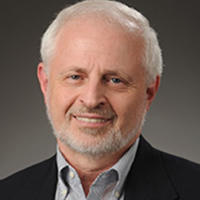 The Jacob Cohen Distinguished Contributions to Teaching and Mentoring Award recognizes demonstrated excellence in teaching and mentoring within the field of quantitative research methods. This year’s award goes to David Budescu, PhD, of Fordham University.
Budescu’s career spans nearly fifty years at primarily 3 top-ranked institutions. Most recently, he was the Inaugural Anne Anastasi Professor of Psychometric and Quantitative Psychology at Fordham from 2008 to 2024. Budescu is a highly recognized scholar in decision science and multivariate analysis. But this particular award is about his teaching and mentoring contributions to the field of quantitative research methods.
Budescu has been the primary mentor on 27 PhD dissertations and 17 master's theses. He has mentored students into producing over 40 first-authored publications, with many more as contributing authors in peer-reviewed articles, conference proceedings and invited talks. Some of these student manuscripts have become quite influential in the areas of quantitative psychology, and his students received numerous awards for research they worked on under Budescu’s supervision. His students have assumed positions in a variety of organizations, departments and universities, demonstrating his broad intellectual impact. The list of names, and their current roles, is impressive.
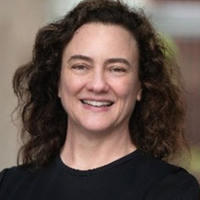 The Distinguished Contributions to Teaching and Mentoring in Qualitative Inquiry Award recognizes demonstrated excellence in teaching and mentoring within the field of qualitative inquiry. This year’s award goes to Sara McClelland, PhD, at the University of Michigan.
McClelland embodies excellence in teaching and mentoring undergraduate and graduate students, and postdoctoral fellows in qualitative inquiry and psychology overall. An award-winning teacher, she has consistently taught graduate seminars and modules in Qualitative Methods, Thematic Analysis, Mixed Methods, and Interviewing in the Psychology Department. Her colleague Isis Settles, PhD, noted that “her graduate courses are extremely popular with students in Psychology, as well as units across the university, which has made a once infrequent course, now a staple in the Psychology department’s curriculum. She has had only high teaching rating scores across the board. Her students have described McClelland as “awesome, challenging, phenomenal, passionate, fair, respectful, intelligent, insightful, understandable, interesting, and intensely dedicated to each and every student.”
 The Distinguished Contributions in Qualitative Inquiry Award honors an individual who has a long and distinguished history of scientific contributions within the field of qualitative research methods. This year’s award goes to Joseph P. Gone, PhD, at Harvard University.
Gone is considered the leading expert on Native American psychology among all psychologists and was the first recipient of the American Psychological Association’s Henry Tombs Award, as well as the Stanley Sue Award (from APA’s Division 12), catalyzing and advancing incredibly instructive, influential and deeply important dialogues of Indigenous Research Methodologies in psychology, the social sciences, education, and Indigenous Studies. His research is characterized by consistent innovation in posing critical and urgent questions and Indigenous inquiry as necessarily collaborative and participatory, as well as the centrality of critical qualitative methods in Indigenous research methodologies.
Gone’s work fuels collaborative programs that bring indigenous practices and knowledge to treatment of addictions and support of mental health to the communities that are affected. The significance of his work cannot be overstated, evidenced by his impressive productivity (including 116 peer-reviewed, 22 chapters,) and its extensive citation. He has been honored with more than 25 fellowships and career awards.
 The newly established Distinguished Contributions in Mixed Methods Award honors an individual who has a long and distinguished history of scientific contributions to integrating qualitative and quantitative methods and in mixed methods methodology. This award is sponsored by Harris L. Friedman, PhD. This year’s award goes to John W. Creswell, PhD, at the University of Michigan.
Creswell is a professor of family medicine and Senior Research Scientist of the Michigan Mixed Methods Program at the University of Michigan. He has authored numerous articles and 33 books (including new editions) on mixed methods research, qualitative research, and research design.
Creswell’s impact on the development and advancement of mixed methods is unparalleled. He is recognized as one of the co-founders of mixed methods approaches, with key contributions including his sole authored book, Research design: Qualitative and quantitative approaches, his coedited books: Handbook in mixed methods in social & behavioral research, and Designing and conducting mixed methods research; and as one of the co-founders and coeditors of the Journal of Mixed Methods, for which he now continues service on editorial board. He is also the founding President of the Mixed Methods International Research Association.
Note that in 2025, there were no nominations for the Division 5 Samuel J. Messick Distinguished Scientific Contributions Award.
Next Year’s Awards
The deadline for the 2026 Division 5 Awards nominations will be Monday, December 8, 2025. Please mark your calendars, spread the word, and consider nominating a recent graduate, early career professional, or other well-deserving colleague.