

Annual 2024 Midwinter Meeting
Division 24 Members and Friends,
We hope that you will join us for our Annual 2024 Midwinter Meeting at Duquesne University in Pittsburgh, PA, April 26-28. This year’s theme is Fostering Flourishing in Psychology through Reflective Discourse and Collaboration.
As we look back on our division’s history and forward to the future, we hope to encourage reflection, critique, and collaboration from diverse voices. The Division 24 Midwinter Meeting offers a unique opportunity for scholars, researchers, and practitioners to forge meaningful collaborations as we build on the work of our predecessors. Taking advantage of this opportunity, we can honor our predecessors’ contributions while bringing together new perspectives to enable a flourishing theoretical and philosophical psychology.
Also note that we have discounted hotel rooms availableopens in new window. We recommend that you book your room as soon as possible, because other events will coincide with our own that weekend.
We are also happy to announce the four keynote speakers that will be presenting at the Division 24 Midwinter Meeting:
"What does 'hamida' mean?": Joys and Pitfalls of Studying the Psychological Messages of K-drama
Mindy Thompson Fullilove, MD, DLFAPA, Hon AIA
Bryn Mawr College
 In our efforts to understand human psychology, we turn to an array of sources. This presentation is about a study of one of the major parts of Hallyu -- the Korean Wave -- known as "K-drama," in particular, popular 16-20 episode shows which are available on many streaming services. These shows typically open with a highly traumatized individual who is caught in some larger social problems. The shows walk the viewers through a process of trauma resolution that enables the individual to rejoin the social group and collaborate on tackling the larger issues that started the trauma in the first place. Every aspect of this process differs substantially from standard Western narratives. While the actual resolution is of great interest, this talk will focus on aspects of the research process, including: the "self" as instrument of research; the challenges of interpreting meaning across cultures; the pitfalls of subtitles; and the distraction of the razzle-dazzle. K-drama has caught the attention of researchers around the world and this work adds to that vibrant body of inquiry.
Restorative Nature Playscape Design: Applied Phenomenology and the Study of Place
Eva-Maria Simms, PhD
Distinguished University Professor Emeritus,
Psychology Department, Duquesne University, Pittsburgh
 This presentation showcases the application of the phenomenological method to the design of restorative playscapes in two locations in the US and Canada. Groups of parents and educators were led through the phenomenological process to study their schoolyards. The goal was to create a deepened engagement with nature and place in order to enhance the environments where young children play, and build playscapes that increase wellness and learning. I will show the redesign of these schoolyards through design reports and photographs. In the second part we will review the place study process and the steps of the phenomenological method: the phenomenological reductions gradually transformed participants’ engagement and understanding of nature and place. Husserl’s phenomenological method and Goethe’s phenomenology of nature will be brought into dialogue with each other. The focus will be on unpacking the psychological transformations that happen during each step (epochés) of the phenomenological method. The epochés guides us through awareness of the natural attitude, attention to experience, description, widening of perception, recognizing structural invariants, imaginative variation, and finally an intuitive and transcendental insight into the flowing totality of the lifeworld. This last step leads to a reversal of subject and object (Goethe) or world and consciousness, which Husserl, in his late writings, described as “a complete personal transformation (Wandlung) comparable in the beginning to a religious conversion (Umkehrung), which then (…) bears within itself the significance of the greatest existential transformation which is assigned as a task to mankind as such.” (CES 137 par 35).
I hope to show the synergy between philosophical theory, procedures of the phenomenological research method, and the transformation of lifeworld spaces and relationships.
Reflections of a Longtime Lurker: Appreciation and Exhortation
Aaron Jackson, PhD
Associate Professor, Counseling Psychology and Special Education
Brigham Young University
 This address summarizes the reflections of a longtime aficionado of Division 24 and the theoretical and philosophical psychology community and consumer of its scholarly work. My observations are grounded in a number of professional roles as a trainer of health service psychologists. These reflections are divided, with some overlap, between appreciations and exhortations. That is, (a) the ways the theoretical and philosophical psychology community has improved the training of health service psychologists and (b) some suggestions for how it might continue to refine the profession.
Appreciations include:
- Putting the issue of human agency/moral agency into the discipline’s dialogue.
- Raising the relevance of related constructs like objectivism and relativism.
- Elevating the discourse around pluralistic perspectives on research
- Providing better philosophical foundations for theories of diversity, equity, and inclusion
- Shifting the ontological premise in the field from individualistic to relational
- Capitalizing on this potential philosophy moment in the history of psychology.
- Clarify competencies that distinguish doctoral training
- Highlight the need for better philosophical foundations for research and practice—especially related to DEI issues
- Provide philosophical and theoretical foundations for models of moderation (i.e. moderating among different perspectives.
- Extend the philosophical critique inherent in qualitative methods.
- Help researchers apply the same philosophical rigor to quantitative methods that has been applied to qualitative methods.
- Help clinicians apply the same philosophical rigor to therapeutic methods that has been applied to qualitative research methods.
- Engaging the broader project of moving philosophical discourse into the mainstream of practice
- Help clients/patients to have more informed consent about therapist philosophy, values, and theory
- Overcome anti-philosophy bias among both scientists and practitioners
- Helping psychologists better distinguish between new ideas and repackaged ideas.
An Aristotelian Analysis of the Degree to which Theoretical Psychology Is Flourishing
Blaine J. Fowers, PhD
Professor, Department of Educational and Psychological Studies
University of Miami
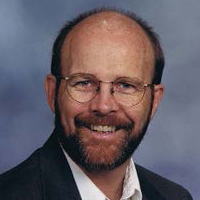 In my presidential address and the subsequent article (Fowers, 2015), I enumerated the four r's (research, reflection, reexamination, and reformulation) of theoretical psychology as an Aristotelian approach to understanding the functions of the subdiscipline. I argued that when these functions are expressed fulsomely, the result could be a flourishing theoretical psychology. That flourishing could be seen in what I termed four goods of the subdiscipline: knowledge, identity, communion, and meaningful contributions. In this talk, I will discuss the degree to which these four r's and the four goods were expressed in this conference. In conclusion, I will address the degree to which theoretical psychology is thriving.