

Two millennia ago, Aristotle stated that actions/behaviors could be understood from four distinct perspectives: material causality, efficient causality, formal causality, and final causality. The natural sciences that developed from the Baconian revolution in the eighteenth century (Physics, Chemistry, Biology, etc.) learned how to conduct research that shed light on the behavior of entities (e.g., falling bodies, evolving species, combining chemicals, etc.) when considered from the material, efficient, and (more slowly) formal causality perspectives. Unfortunately, scientific explanations came to be seen as those that eschewed final causal perspectives in their explanations of why things behave as they do. However, in my life as an ordinary human (as opposed to my life as a psychological scientist) almost all my actions are best understood (in my opinion) from the final cause perspective. Our theme, “Psychology for Humans: Can Psychological Humanities Include Those (People, Perspectives, and Methods) that Psychological Science Now Neglects,” is best approached from the final cause perspective. For example, writing this paper is the natural result of my plans, goals, purposes, and intentions. But how might one create a proper science from the final cause perspective?
Andy Giorgi, Fred Wertz, Don Polkinghorne, and Scott Churchill offered one approach to a final cause science (see Giorgi, 1970) based upon their grounding in phenomenology; George Kelly, Joe Rychlak, and Brent Slife, offered a quite different approach (see Rychlak, 1989) which mined the philosophical notion of the underdetermination of theory by evidence (i.e., the results of scientific studies are interpretable in multiple ways, not just the explanation the researcher offers); and Christine Conway, Bill Tageson, Scott Maxwell and I offered a third approach (see Howard & Conway, 1986) that posits that humans freely create their own behavior because they are active agents rather than helpless pawns to material, efficient, and formal cause influences. These three ways of appreciating the final cause influences in the genesis of human actions are completely complementary with one another—at least in my mind. Thus, teleological influences on the formation of human actions are scientifically more knowable now than they were 50 years ago. I wager that eventually research on final cause influences will look more like the humanistic-oriented disciplines of History, Literature, Philosophy, etc. than they will resemble our current natural science-oriented studies of humans. Concerning the question of the nature of light, physicists taught all scientists the principle of complementarity—ask light a wave question, and you get a wave answer; ask light a particle question and one receives a particle answer. Thus, one may wonder whether light is a wave or a particle. It turns out, it can be both. The critical issue is: What sort of question do you ask of light? Psychology has asked far too many material and efficient cause questions—and far too few final cause questions of humans. The questions and answers obtained in the three programs of research mentioned above are filled with final cause notions that have long and insightful histories in our humanistic disciplines.
There is another reason that the future of psychological research will more-closely resemble humanistic research than the natural science research it now apes. The short answer is that our present research efforts often fail when attempting to appreciate uniquely human characteristics like intentionality, longing, loss, and so forth. In my hubris, I consider all the people that I reference in this essay to be my peers. That is why I hope that Don Polkinghorne, Joe Rychlak, George Kelly, Bill Tageson, and Phil Cushman will also offer their insights to this collection of essays. Sadly, we all know that will not happen. Division 24 has been wounded by the loss of each of these thinkers—for each left us far too soon. I also am wounded by their passing. I frequently imagine each of them seeing parts of their own thinking reflected in my writing. I then “watch” (in my mind’s eye) when they realize their contribution to my education. Don Polkinghorne (1988) would smile beatifically, as he always looked for the very best in others. Bill Tageson (1982) would be surprised and think, “Darn, I didn’t think George even read my stuff,” because Bill habitually underestimated the worth of his own contributions. Finally, the irascible Joe Rychlak would have thought, “Close, George. But you did not get my thought quite right.” He then would have dropped my mark by a half-grade. And I love each of them because that is exactly who they were—and are—at least in my mind. Mary Gergen tells me that psychologists ought to engage in performative art, as one way of doing research. But that suggestion puts me off—does one need to be a Lawrence Olivier (Hamlet) to learn more about human depression? “Of course not,” Mary smiles, “do you know how to sing?” “Of course I do,” I bluster, “so you are implying that singing is performative art?” OK. Don, Phil, Joe and Bill, listen up. This song’s for you. [I am singing “Done Too Soon,” a song by Neil Diamond] Here goes, “…And each one of them, had one thing to share. They have sweated beneath the same sun. Looked up in wonder at the same moon. And wept when it was all done, for being done too soon. For being done too…” Do you long for someone from your past? Do you still interact with them in your more-pensive moments? Does that tell us something about what it means to be human?
I just do not think that another natural science-inspired study of the material- and efficient-cause correlates of loss, longing, and death will help us appreciate what it means to experience these emotions. But there is now a more-concrete way to demonstrate why a natural-science approach to the study of human beings will eventually prove inadequate to the task of appreciating our human natures. It is now completely clear that psychologists can not replicate their results at anywhere near the replication rates achieved by the natural sciences themselves (Open Science Collaboration, 2015). If a science is unable to replicate its findings, it has little hope of fulfilling its scientific ambitions. Thus, following the leads of the three research programs (mentioned above) into the final cause wellsprings of human action might be a fruitful first step in upgrading our research armamentarium. [New methodologies for increasing our ability to improve our research replication rates have recently been developed. Email me and ask for a preprint of the ORMA paper to learn more.]
Other streams of thought have led me to the humanistic methodologies to study final cause influences in human action that I set forth in this essay (see Howard, 1986, 1989, 1996). The model of research that I have in mind will not resemble research as psychology now conducts it. It will, instead, look more like what transpires in the clinic. Research participants will describe their problems, their thoughts about how these problems developed, and what steps might be taken to alter the present situation. Like therapists, researchers in my imagined future will work collaboratively with their research participants to jointly puzzle-through their studies’ results. Rigor is a chief characteristic of the natural science approach to studying the material- and efficient-causes of human behavior. Within psychology, the natural science model now possesses richer methodological resources than it possessed (say) 50 years ago. We are lucky to possess superior natural science methodologies because we still have much more to learn about human actions when viewed from the material and efficient causal perspectives.
Our ideological commitments (in the past) to a rigorous, natural science-like methodology for studying humans (inadvertently) stifled our efforts toward developing a science of final cause elements in the genesis of human actions, emotions, and experiences. However, the humanities have never been stifled by a similar impediment—for they were not trying to develop a science. That is why, as we look to jump-start programs of research on final cause elements in human actions, we ought to first look to our humanistic sisters and brothers (e.g., History, Literature, the Performative Arts, Philosophy, etc.) to learn some of their conceptual and methodological resources. All of this is to explain why I think the call by Division 24 for a collection of essays was prescient. All that remains is the question, “Do we possess the intellectual, emotional, and spiritual resources necessary to lay out research programs that probe the teleological wellsprings of human action?”
There is a corner of my mind reserved for past, present, and future Division 24 members. It turns out these friends are now chatting during one of their APA Social Hours. They are reacting to this essay and some of their comments are getting heated. “George, you have been too easy on the natural science arm of psychology. These psychologists have been denigrating and stifling qualitative approaches for many decades.” “Quite true, (I reply to the Andy Giorgi-in-my-mind), but I am a quantitative psychologist, I have only a passing acquaintance with qualitative methods. I have done all I am able to do for qualitative methods. Will you write an essay for this collection? Or perhaps Fred, or Scott, or Chris will.” As always, Don Polkinghorne, Bill Tageson, Rom Harre, Paul Secord and many others have nothing but encouragement for our qualitative confreres, “Come on, people, you are all able to do it. This is important,” they shout.
I notice that Phil Cushman (1995) has been silent throughout our discussion. I am saddened that his important views on the socio-political aspects of our ideas have not been argued. “Unfortunately,” I mutter sadly, “I can be of no help to you, Phil. But there must be someone out there to present your wisdom. I would think that many young psychologists would find Phil’s thinking convivial. Will no one do Phil the kindness of carrying on his thought?” Phil looks at me and asks, “What is going on here, George? Is this a scholarly paper, or is it just a trip down memory lane? Is this the sort of research you are advocating for psychologists? Has this experience gotten us any closer to an understanding of the telic nature of human thoughts and actions? Or perhaps you have simply told a provocative story. Most importantly, whose interests have been furthered and whose voices were stifled by this tale?” Of course, I have no answers to Phil’s questions. But since this play is being acted out in a corner of my mind, it costs me nothing to at least look generous. “Good discussion, friends. Drink up. This round’s on me.”
No one seems to want to talk with Phil Cushman, so I slide over to him. “Phil, I bet it was no surprise to you to find out that psychological studies from the natural science perspective are often found to be virtually unreplicable.” He nods in agreement. “Did you know that it’s because our statistics are discriminatory?” I continue. “Discriminatory against who?” he asks. “Not who,” I reply, “They’re discriminatory against what!!!” “I’ll bite,” Phil replies excitedly, “What do natural science studies discriminate against?” “Nonsignificant results!!!” I offer triumphantly. You can never know the Truth if your significant findings get published and your nonsignificant findings wind up unpublished and in our file drawers (Rosenthal, 1979). Our journals are overflowing with significant results, while our file drawers are stuffed with nonsignificant findings. Discrimination never gets you what you want—the Truth. It only gets you a sick society.” “Amen to that, buddy” Phil replied, “And where did you say I could ask for that ORMA paper? “At howard.2@nd.edu,” I offer for a second time. “And Phil, you can rely on me to not tell your friends that you’re now reading statistics papers in heaven.” “Thanks,” Phil responds, “It is truly amazing what we humans will sometimes do to get closer to the Truth. Too bad we cannot teach politicians how to care about the Truth.”
What activities do the humanities perform when they conduct their “research?” They make up stories about human beings; they compose and sing songs about human characteristics; they carefully analyze the history and development of concepts, people, and institutions; and so forth. That is precisely what we did in this essay. Will doing more (and better) such work lead to a superior understanding of humans? You (careful reader) tell me. “But even if it’s good knowledge, will it be “a science” of humans?” I wail in despair. My friends respond as if with one voice, “Good is good, George. Who cares whether or not we call it science?” Sounds good to me (I think) but, of course, my friends have been drinking. [I am too old to know how to put a smiley-face here.] Are humans the only animals who make jokes?
And then, as if rehearsed for a musical play, my friends begin to softly sing “The Rose,”
Some say love it is a river that drowns the tender reed,
Some say love it is a razor that leaves your soul to bleed.
Some say love it is a hunger, an endless aching need,
I say love it is a flower and YOU its only seed…
When the night has been too lonely, and the road has been too long
And you think that love is only for the lucky and the strong
Just remember in the winter, far beneath the bitter snows
Lies the seed that with the sun’s love, in the Spring becomes the rose
Did you sing along with us? Good. [In therapy, this is called a guided fantasy.]
But I just now got an insight. [Did an orbiting planet, a combining chemical, or a learning dog ever get an insight? Well, perhaps the learning dog…] But humans get insights all the time. For example, how do you know when you have read a great research paper? When a careful reader (like you) begins her evaluation with, “It made me laugh; it made me cry; and it reminded me of myself…”
References
Cushman, P. (1995). Constructing the self, constructing America. Addison-Wesley.
Giorgi, A. (1970). Psychology as a human science. Harper & Row.
Howard, G. S. (1986). Dare we develop a human science? Academic Publications.
Howard, G. S. (1989). A tale of two stories: Excursions into a narrative approach to psychology.
Academic Publications.
Howard, G. S. (1996). Understanding human nature: An owner’s manual. Academic
Publications.
Howard, G. S. and Maxwell, S. E. (in press). ORMA: A strategy to reduce psychology’s replication problems. New Ideas in Psychology.
Howard, G. S. and Conway, C. G. (1986). Can there be an empirical science of volitional action? American Psychologist, 41, 1241-1251.
Open Science Collaboration (2015). Estimating the reproducibility of psychological science. Science, 349. https://doi.org/10.1126/science.aac4716opens in new window
Polkinghorne, D. (1983). Methodology for the human sciences. State University of New York
Press.
Rosenthal, R. (1979). The “file drawer problem” and tolerance for null results. Psychological Bulletin, 86, 638- 641.
Rychlak, J. F. (1989). The psychology of rigorous humanism (2nd ed). New York University
Press.
Tageson, C. W. (1982). Humanistic psychology: A synthesis. Dorsey Press.
Author's Bio
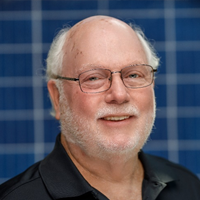 George S. Howard, PhD, spent fifty years in higher education, the last forty of which were at the University of Notre Dame. His last decade has involved founding, owning and serving on the Board of Directors of Inovateus Solaropens in new window, one of the five largest solar development companies in the nation. With 18 books and over 200 articles and chapters, his specialties include research methodology and philosophical psychology. His wife, Nancy Gulanick, two sons, John Gulanick and Greg Howard, and two grandsons keep him quite busy indeed.