

That the discipline of psychology is treated as a “science” and nothing more is reductive and constraining – on this we can all agree. We, in Division 24, have long argued for the pluralization of methods, the incorporation of the humanities, and the broadening of psychological discourse to include its theoretical and philosophical foundations. In recent years, a burgeoning interest in what has been called the “psychological humanities” has emerged with many of us hoping that it will galvanize these interdisciplinary realignments. We’ve come to this with different rationales. Some have seen in this movement the capacity for uncovering the power structures at work beneath our subjectivities (e.g., Rutherford, Teo), others a means of seeking greater fidelity to human experience (e.g., Freeman), and others a recognition of the moral and cultural horizons our psychological technologies reflect and reinforce (e.g., Cushman, Marecek). Behind this plurality of hopes and ambitions, there is a worthwhile question: Why is the development of a psychological humanities important and what is it in the service of?
This year’s presidential theme does not seek to resolve this question or provide a common ground. Rather, it invites us to give an account of ourselves, to deepen our understanding and articulation of why we desire a more human, humane, and humanities-informed psychology. What would such a psychology look like? Who would it serve? The various interests and commitments we bring to these questions open the possibility of a community living with a fuller and more diverse vision of the future – in dialogue together.
Author's Bio
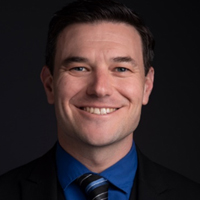 David Goodman is the Associate Dean for Strategic Initiatives and External Relations, Director of the Center for Psychological Humanities and Ethics, and an Associate Professor of the Practice in Counseling, Developmental, and Educational Psychology in the Lynch School of Education and Human Development at Boston College. He is also an Associate Professor of the Practice in the Philosophy department in Boston College’s Morrissey College of Arts and Sciences. Goodman currently serves as the Series Editor for the Psychology and the Other Book Series with Routledge. He has authored and edited over a dozen books including The Demanded Self: Levinasian Ethics and Identity in Psychology (with Duquesne University Press, 2012), Psychology and the Other (with Mark Freeman and Oxford University Press, 2015), The Ethical Turn: Otherness and Subjectivity in Contemporary Psychoanalysis (with Eric Severson and Routledge, 2016), In the Wake of Trauma: Psychology and Philosophy for the Suffering Other (with Eric Severson and Brian Becker and Duquesne University Press, 2016), The Road to the Living God: Ana María Rizzuto and the Psychoanalysis of Religion (with Martha Reineke and Rowman & Littlefield, 2017), Critical and Theoretical Perspectives in Psychology: Dialogues at the Edge of American Psychological Discourse (with Heather Macdonald and Brian Becker and Palgrave Macmillan, 2017), Memories and Monsters (with Eric Severson and Routledge, 2017), and Race, Rage, and Resistance: Philosophy, Psychology, and the Perils of Individualism (with Eric Severson, Heather Macdonald, and Routledge, 2020). Co-authored with Matthew Clemente, Goodman currently has a book under contract with Oxford University Press titled Technology and Its Discontents (forthcoming). Goodman is also a licensed clinical psychologist and has a private practice in Boston, MA.