

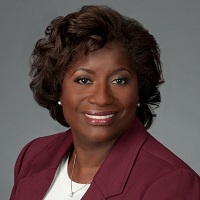
 Dear Colleague,
It is an honor to run for president of the American Psychological Association. If elected, I will bring a long track record of advocacy, a deep and demonstrated commitment to collaboration and inclusion, and substantial leadership experience within and outside APA.
The election opens on Sept. 16, and I ask for your support and your #1 vote.
The four pillars of my presidential campaign are:
- Advocacy
- Inclusion
- Leadership
- Experience
I genuinely believe these four pillars are necessary to continue strengthening our association and creating a positive impact within APA, the discipline and the world.
For psychology to thrive, we must vigorously advocate for adequate funding to support psychological science and education. We must also continue to advocate for access to quality, evidence-based health and behavioral care for all, and ensure that psychologists are adequately compensated for the services we provide, that we are so well trained to do. If we successfully grow and nurture our advocacy network, we can make a real difference in the world by understanding and intervening in the social issues that affect our society, such as homelessness, the opioid epidemic and the stigma surrounding mental illness.
For psychology to thrive and grow as One APA, we must stay grounded in the spirit and ethos of inclusivity. It is essential if we are to play critical roles in solving the concerns facing society. We must incorporate the diverse perspectives of all psychologists, from students to our experienced colleagues, partner with our colleagues to promote and honor the international perspectives within psychology, which is key to our more global society, and integrate applied and applied practice psychologists for what they bring to our profession.
It is important to have an understanding of the challenges, strengths and opportunities for state, provincial or territorial psychological associations (SPTA), and understand their role in legislative advocacy. I have been involved in leadership in my home SPTA, Georgia Psychological Association, since 1991. I continue to be an advocate for the SPTA issues.
I have chosen two presidential initiatives:
- Expand and advocate for the inclusion of psychological research, education/training and services in Integrated Care. APA has contributed significantly to the establishment of integrated care models, but I believe we can do a better job in coordinating the work that we do, and I would like to facilitate this.
- Enhance and ensure services, education/training, and understanding/researching best practices for individuals living with serious and persistent mental illness. This population is among the most marginalized and underserved. I am confident we have much to offer in working with this population, and that all of psychology can make a difference in the recovery process. A new model of care is past due, and I would partner with the Task Force on Serious Mental Illness and Severe Emotional Disturbance to advance this agenda.
Health disparities affect these two important arenas. With both initiatives there is much work to be done to have desired impact, and I would welcome collaboration with APA members.
For psychology to have a significant impact and achieve the goals of our strategic plan, we must have a united organization. This year has been a transformative year through APA’s adoption of the integrated advocacy model. This is significant as it means that we are breaking down silos and working in a united manner, which is critical to understanding and effectively addressing issues facing our profession and society.
We need leadership to help meet the needs of our changing profession and world. We need leadership that embraces integrated advocacy and empowers grassroots advocacy, is ready to implement APA’s new strategic plan, and is deeply committed to advancing our position as leaders in health care. I can provide that leadership. I have the knowledge, extensive experience and ability to unite diverse perspectives inside and outside of psychology. I understand the nuances and have the drive and passion to help move the association forward. I am asking for your vote and your partnership in these efforts.
Responses to questions presented by the leadership of Division 31
What do you perceive as being the issues of greatest concern to SPTAs, as organizations?
One of the primary issues relates to keeping the organization financially viable, meaning keeping the doors open. The amount of revenue needed to maintain an office and staff can be challenging. Most of the revenue generated to maintain the organization is from membership dues. There can be some income generated from the annual meeting or the continuing education courses, but most of it is from membership dues. Many SPTAs have opted to have management companies manage the association, but that places much burden on the volunteer officers to meet the needs that one expects from psychological associations. At the same time that there are financial challenges, there is the need to keep the organization relevant, meeting the needs of the members. There is a need to attract the early career psychologists, our future. This is especially important as we are an aging association.
It is important to remain focused on legislative issues. This is critically important because legislation that impacts on members nationally are often initiated on the local level. The small/very small SPTAs are especially vulnerable to this so it will be important to make sure they have a robust legislative agenda.
What do you perceive as being issues of greatest concern to members of SPTAs?
The primary issue to many members of the SPTAs is reimbursement, how to bill for services and be adequately and appropriately compensated for the services they provide. Most of the members are in independent practice and they turn to their psychological association to address the areas.
Members want to see more social justice involvement from their SPTA. In the past there has been more focus on SPTAs being guild organizations, focusing on reimbursement issues and making sure that psychologists are financially viable, for example. Now there is the need to balance that with making sure that we have social justice involvement.
Members also have concern that they may not be getting enough for what they are paying for. They want to make sure that the organization is meeting their individual needs.
If elected to the APA presidency, what would you do to address these issues?
One of the most effective ways that APA can address SPTA issues is connecting with the Practice Directorate, in which there is a state advocacy office and an effective government relations team (part of the C6—APA Services Inc). The Leadership Conference is important in addressing SPTA concerns as well. There has been much evolution of this, from the State Leadership Conference, to the Practice Leadership Conference, and to the Leadership Conference. Although it is not yet clear how all of this will play out with the new structure, it will be critically important to make sure that practice does not lose its focus. During the past leadership conferences, there was much support for the SPTAs, the officers, executive directors, early career psychologists and diversity delegates. The leadership conference has done a good job in the past in infusing social justice into the congressional messaging, and hopefully the SPTAs will take that back to their own organization. We want to make sure that this is something that will continue.
It is known that 50% of the members of APA do not belong to their SPTA or to divisions. There needs to be a way in which the SPTAs can attract these other members, through a nationwide membership campaign targeting this other 50% members.
I am providing a summary of my leadership service. For more information please visit my websiteopens in new window.
Thank you for your kind support.
Jennifer F. Kelly: Science, Practice, Education and Public Interest all United to Benefit Society and Improve People’s Lives.
Endorsements
- Division 31: State, Provincial & Territorial Affairs
- Division 2: The Society for the Teaching of Psychology
- Division 17: Society of Counseling Psychology
- Division 19: Society for Military Psychology
- Division 29: Society for the Advancement of Psychotherapy
- Division 38: Society for Health Psychology
- Division 40: Society for Clinical Neuropsychology
- Division 42: Psychologists in Independent Practice
- Division 44: Society for the Psychology of Sexual Orientation and Gender Diversity
- Division 45: The Society for the Psychological Study of Culture, Ethnicity and Race
- Division 51: Society for the Psychological Study of Men and Masculinities
- Division 55: American Society for the Advancement of Pharmacotherapy
- APA Women’s Caucus
- APA Public Interest Caucus
- Georgia Psychological Association
- Massachusetts Psychological Association
APA Governance
- Recording secretary and member-at-large of APA Board of Directors (2010-18)
- Liaison to the Board for the Advancement of Psychology in the Public Interest and its committees (2013-18)
- Representative to the Alliance of National Psychological Associations for Racial and Ethnic Equity (2013-18)
- Liaison to the Ethics Committee (2013-18)
- Council of Representatives (2004-09)
APA Leadership
- Co-chair of APA Advocacy Coordinating Committee (current)
- Committee for the Advancement of Professional Practice (2008-09)
- Board of Professional Affairs/past chair (2005-07)
- Founder/organizer: Diversity Leadership Development Workshop (2009-current)
- Executive Advisory Committee: Leadership Institute for Women in Psychology (2011-current)
- Association for the Advancement of Psychology (APA PAC) — Chair of Board of Trustees (2008-10)
- Div. 31 Board of Directors (2008-10); President (2009)
- Div. 29 Board of Directors (2007-09)
APA Task Forces
- Co-chair of APA Expanded Advocacy Model (2018)
- Task Force to revamp convention (2010)
- Future of Psychology Practice (2008-09)
- Early Career Support Initiative (2006)
- Infusing Multicultural Guidelines throughout APA (2006)
- Education and Training leading to licensure in Psychology (2005)
SPTA experience
(Georgia Psychological Association)
- President (1999-00)
- Secretary (1997-99)
- Federal advocacy coordinator (2000-current)
- Treasurer of the Political Action Committee (2000-current)
- Past chair of the Ethnic Minority Affairs Committee (1992-97)
- Past chair of the Membership Committee (1991-92)
Awards and recognitions
- APF Timothy B. Jeffrey Memorial Award for Outstanding Contributions to Clinical Health Psychology (2012)
- APA Practice Organization State Leadership Award (2011)
- State Leadership Diversity Delegates Diversity Award (2011)
- Association for Women in Psychology Publication Award (2011)
- Georgia Psychological Association Community Service Award (2007)
- Div. 31 Outstanding Psychologist Award (2006)
- APA Practice Organization Federal Advocacy Award (2004 & 2019)
- APA Karl F. Heiser Advocacy Award (2000)
- Georgia Psychological Association Legislative Advocacy Award (2000)
Community/professional involvement
- American Board of Professional Psychology Foundation Board of Directors
- Board of Directors Leadership Atlanta (2003 Graduate)
- Past chair, Health Day
- CHRIS Kids — board member (2005-13)
- Project Interconnections — board member (secretary) — (1996-12)
- Atlanta Metro Lions Club (1993-present)
- Diversity Leadership Academy of Atlanta (2003 Graduate)
- Zeta Phi Beta Sorority
Please visit the following webpage for low vision accessibilityopens in new window.