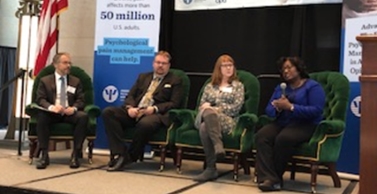
 This January, I had the privilege to attend both a legislative forum and a continuing education workshop co-sponsored by APA and my state psychological association in Ohio. The event was a pilot project aimed at raising awareness for legislators and regulators of the role psychologists play in pain management, as well as providing evidenced-based training in pain management skills for psychologists. The hope was to provide basic skills for psychologists already in the workforce to help provide access to the many patients in need of psychological pain management treatment. Ohio was a thoughtful choice to kick off this project, given it has the second highest per capita deaths from opioid overdose. In fact, both OPA and APA are addressing psychologists’ role in combatting the opioid crisis in their strategic plans.
The event kicked off Jan. 23 with a strong presence of leaders from both APA and OPA, including Arthur Evans, APA CEO, Jared Skillings, APA chief of Professional Practice, Sandy Shullman, APA president, and Jennifer Kelly, APA president-elect. The OPA president-elect, Cynthia Van Keuren, a pain management expert, was one of the panelists.
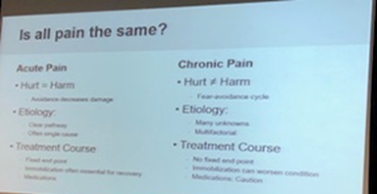
The continuing education workshop “Psychological Pain Management” was led by Jennifer Kelly, Daniel Bruns and Ravi Prasad. They did a masterful job covering the relationship of chronic pain and the opioid crisis, explaining theories of pain and the biopsychosocial approach to care, and considering the contextual and cultural factors and pain. For example, Bruns shared that 21-29 percent of patients exposed to opioids will misuse them, and 10 percent will develop a substance disorder. The speakers provided practical tools on conducting a pain assessment and providing evidenced-based treatments including for pain and insomnia, activity pacing, relaxation training and cognitive restructuring. In fact, CBT is one of the five recommended evidenced-based treatments for pain management according to Prasad. In addition, ethical considerations and billing/reimbursement were discussed. Kelly addressed knowing the limits of your competence and examining your own reactions to particular aspects of pain treatment. The curriculum of the workshop was developed carefully to provide a broad overview accessible to the non-expert psychologist that could be used across the country. As a health psychologist with background in pain management, I found the program to be informative and a positive refresher on tools and techniques I use in my practice.
I would like to personally thank APA, OPA and the speakers for providing this terrific opportunity for learning and advocacy. I hope that they will take this experience and bring similar trainings to other states. Div. 31 will keep you posted on developments with this initiative.
Helpful Links
- Psychology’s Unique Role in Addressing the Opioid Crisis
- Coping with Chronic Pain
- The Role of Psychological Pain Management Care in Addressing the Opioid Epidemic Policymaker Forumopens in new window
- Did You Know... The State of the Opioid Epidemic in Ohioopens in new window
- Roster: APA Guideline Development Panel for Treatment of Chronic Musculoskeletal Pain in Adults