

Beth Rom-Rymer, PhD
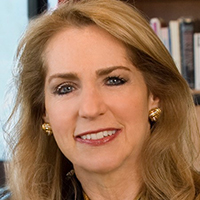 SPTAs are critical in the work of our APA. As draconian legislation tries to shut down the voices of minoritized and marginalized populations in our states, our SPTAs are on the frontlines, there to fight to legislatively protect and expand the therapist-client privilege and other legislation that is key to the practice of the broad spectrum of psychologists’ work. As Supreme Court Justices Alito and Thomas explicitly threaten to overturn a litany of Supreme Court decisions that have established transgender rights, same sex marriage, interracial marriage, the right to an abortion, and other privacy rights; it is our SPTAs, in partnership with other statewide organizations, that will be key in organizing the various interests in our states to deliver well-articulated criticism, based on our psychological science, of the psychologically and physically harmful sequelae of these decisions.
As a two-term president of the Illinois Psychological Association and a 2014 winner of the Division 31 National Outstanding Psychologist Award, I am so very much grateful to have received the #1 endorsement by Division 31 for my candidacy for President-elect 2023.
And here is my Campaign Statement:
We are living in a world shaken by trauma: the ongoing crimes against humanity in Ukraine; the struggle to sustain international democratic states amidst authoritarianism; the challenging campaign to inoculate all people, worldwide, against COVID-19, while COVID illnesses and post-acute COVID symptoms continue to devastate some families and thwart the return to normalcy of other families and communities; the ever-escalating, murderous gun violence and the concomitant dearth of protection from gun violence; the loss of reproductive freedom and the potential loss of previously recognized constitutional rights, such as same sex marriage, and other recent, hard-won protections; the suffering caused by institutional racism, anti-Semitism, violence against BIPOC, LGBTQ+, AAPI, and disabled communities.
My life’s work as trauma clinician, forensic expert, legislative advocate, law enforcement consultant, University lecturer, author and state, national and international leader, uniquely qualifies me to be APA President.
Psychologists, because of our extraordinary education, training, and experience, have an impact, every day, on the lives of those who are suffering in our local, national, and international communities. Because of our capacity, I wholeheartedly support the essential, frontline work of clinicians and the critical work done by academic researchers, experimental psychologists and social, forensic, industrial, organizational —the entire range of applied psychologists. I am committed to dismantling systemic racism and I am committed to listening and responding to all of the initiatives from our diverse APA communities. We will continue to powerfully speak on behalf of all psychologists.
I passionately believe in protecting clinical practice while seeking to expand practice to include: prescriptive authority; integrated behavioral health in primary care and in a variety of healthcare and medical settings; telehealth durability; community mental health; population health; and a plethora of collaborative working relationships among research scientists and scientist practitioners so that we can achieve health equity.
Having had broad experience in APA governance, including APA Board; APA Council; Chair of the Council Leadership Team; APA Caucuses Chair; President of the Illinois Psychological Association; President of Divisions 55 and 56; and as a founder and leader of the International Prescriptive Authority Movement, I understand how to get things done.
My vision for the APA has 7 Foundational Pillars of Action:
- Identifying and disseminating the critical information on evidence-based/evidence-informed treatments for the sequelae of COVID-19; for the substance abuse and addiction disorders; and for all other psychological disorders;
- Using our effective scientific evidence to contribute to the eradication of global health disparities; the dismantling of systemic racism and antisemitism; and the achievement of health equity;
- Promoting global initiatives that will reduce the existential threats to our environment and will meet the challenges and needs of climate refugees;
- Facilitating greater access to comprehensive, integrative, mental health care, including Prescriptive Authority; I wholeheartedly support subspecialty and specialty practice;
- Promoting clinical practice and working closely with SPTAs to ensure that they have the necessary tools to address developments in state legislatures that might erode the privacy rights of patients and erode the psychotherapist’s privilege. I will ensure the financial viability of our APASI.
- Emphasizing the critical importance of scientists and psychological science, infused with EDI initiatives, fulfilling our APA mission to impact our world.
- Providing for the continued growth of an inclusive APA that ensures multidisciplinary (within Psychology), multicultural, multinational APA leadership with representation from all minoritized and marginalized communities, including BIPOC, Jewish, LGBTQIA+, AAPI, and disabled communities.
As your President, I will walk courageously, with you, into our future. I will listen to you with respect and compassion and govern boldly. My outreach to all of our communities will be collaborative, intersectional, with an emphasis on scientific evidence and psychological knowledge, bridge-building, EDI, and gender and sexual diversity, to unravel and solve our world’s toughest challenges.
Diana Prescott, PhD

What offices or positions have you held in your SPTA, and when?
I served as a Member at Large on the Maine Psychological Association (MePA) Policy Council from 1997 to 2008. I also have served as Rural Health Coordinator for MePA. When the APA Committee on Women in Psychology (CWP) requested a Network representative in the states, I volunteered to serve in this role. I also volunteered to serve as Federal Advocacy Coordinator when we did not have one and have served in that role from 2003 to present. I was elected APA Council representative for MePA 11/2007, reelected, and served in this role to 2014. Since 2014, I have been serving in APA leadership roles and remain connected to MePA through the listserv, federal advocacy, continuing education, and the annual meeting.
Describe your activities and accomplishments at the local/SPTA or national level which have strengthened SPTAs.
At the state level, I helped organize regional gatherings for the Women in Psychology, in my role on the CWP Network for Maine. The women related at a MePA meeting that they felt isolated. The regional groups have met in Portland, Waterville, and Bangor. The Bangor Area Women in Psychology continues to meet monthly during the academic calendar year. During 2008-2014, I helped initiate and co-chaired the Maine Integrated Primary Care Committee. In the state of Maine, I have chaired the Maine Migrant (now Maine Mobile) Health Program board and served as a Board Member on the Maine Primary Care Association (MePCA) Board. I am a current member of the Maine Rural Health Action Group (RHAN). I have participated in a monthly CE meeting of the Bangor Area Psychological Society (BAPS). On November 10, 2017, I was unexpectedly awarded Fellow status at the MePA Fall Conference.
At the national level, I have served on the APAPO Committee for the Advancement of Professional Practice (CAPP) (2017-2018). I served on the APA Committee of State Leaders 2011-2014 and was elected Chair-elect in 2013. I received the APAPO Federal Advocacy Award March 12, 2012, at SLC. I have served on the APA Board of Directors as a Member at Large and Recording Secretary. As part of serving on the APA Board, I was chosen as the liaison to CAPP (Practice) and the Association of State and Provincial Psychology Boards (ASPPB). I have chaired the Rural Health Interest Group and Caucus and served as Secretary for the Caucus of State, Provincial, and Territorial Affairs.
What do you perceive as being the issues of greatest concern to SPTAs, as organizations or SPTA members, and how would you address as APA President?
I am concerned about threats to our profession and initiatives for the public that first are exposed at the state level (e.g., reversal of reproductive choice, threats to LGBTQ+ community, racism, discrimination of the mentally ill and those with disabilities).
I also want to assure there is significant support for the needs of psychologists. I believe the APA Advocacy Coordinating Committee (ACC) provides a vehicle to increase the emphasis on the needs of psychologists. As President, I would be interested in determining how the ACC could consistently be informed of the needs of the psychologists who are members of state associations.
Many of our SPTAs have small staffs and limited resources, depending on APA for financial support and assistance. As President, I would fiercely oppose cuts to support legislative grants to state associations.
I am concerned about psychologists at the state level who have left APA. I believe we should be talking to them about their reasons for leaving, initiating change at APA to incentivize them to return to APA membership.
Psychologists need to more easily be able to work across state lines, and APA needs to help with this. PSYPACT is one important vehicle for this effort, and this compact can only be passed at the state level. States need support for this and other state-level legislation enhancing and protecting psychologists and expanding their ability to work seamlessly across state lines. In Maine, the state association recently received an award from APA for their advocacy working with the state legislature to approve PsyPact, which enables practice across state lines, increasing the available treating psychologists in rural Maine.
Due to our sequence of training as psychologists, in many states the provision of post-doctoral supervision becomes a barrier to attracting practitioners to states that do not have sufficient opportunities for post-doctoral supervision. APA has focused on this issue and needs to continue to assist the states with addressing this, so that post-doctoral supervision does not prevent states from obtaining an adequate number of valuable psychologists.
Telehealth presents an opportunity for psychologists to improve our incomes by augmenting our face-to-face treatment income.
We need to be paid a decent wage for our work.
We continue to need to make the case for the importance of the doctoral standard for practice at the state level, and we need scientific evidence to support our case.
Psychologists could potentially benefit from diversifying work in ways we have not previously considered, and APA could be helpful sharing models and resources for such diversification.
Considering the APA reorganization around advocacy, what do you see are the biggest challenges integrating SPTAs into the new agenda?
SPTAs are generally outside of the APA structure (unlike some of our divisions), and this may provide less leverage for our agenda. It is important to have strong state representation on the ACC. Our state representation can be more effective now at APA, if we are active across the “pillars” of APA. We may need to intentionally form partnerships between types of psychologists at the state level, assuring our psychologists are running for Boards and Committees and bringing a state perspective to those places within APA. The former State Leadership Conference continues to be a vehicle for promoting state-related issues, but it is broader now as Practice Leadership. Of course, Council is a place where states have a voice in directing the course of APA. It would be important to assure in any future change in Council structure states continue to be well-represented. The State caucus is a helpful vehicle in politically assuring this representation, although technically outside of APA writ large. The expanded Board of Professional Affairs (BPA) is another place where states can have important impact, mobilizing APA to address state-level issues.
Please add any comments you’d like which are not elicited above that address the affairs of state, provincial, and territorial psychological associations.
I am a strong advocate for the state psychological associations. I have been raised up in leadership through the state associations. I understand the importance of the state interests to APA, and as APA President, I would listen and respond to the concerns and needs of the states.