

Review author: Matt Goldenberg, PsyD
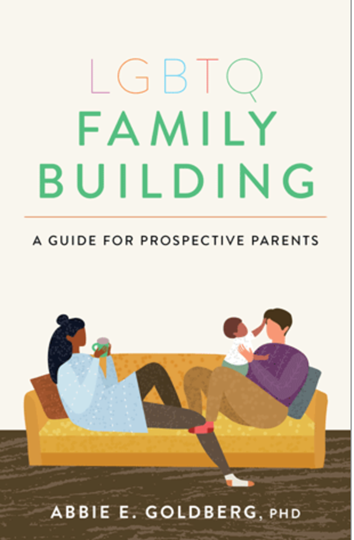 Citation: Goldberg, A. E. (2022). LGBTQ Family Building: A Guide for Prospective Parents. Washington, DC: American Psychological Association (319 pages).
Each chapter begins with a glimpse into the lives of LGBTQ persons and details their family building experiences. Chapters can be read independently, as each chapter covers a different sub-topic that readers may find helpful.
The book offers a flow that begins with decisions to become a parent and concludes with parenting our children. Thus, LGBTQ Family Building offers a developmental approach to LGBTQ parenting, from decisions to build a family, to how LGBTQ people become parents, to supporting the children we have in our lives.
A particular strength of this book is that there seems to be no preferential attitude toward any method of becoming a parent. Instead, there is equal attention paid to individuals and or couples that choose adoption, surrogacy, heterosexual sex, fostering, and insemination. It is rare to find a resource that does not perpetuate judgment that one method of becoming a parent is preferable to another. There are many family structures within the LGBTQ community, and LGBTQ Family Building offers equitable resources for several types of families. Additionally, the book is evidence-based as Goldberg conducted a survey of 543 LGBTQ individuals and their experiences in family building, a project titled “The LGBTQ Family Building Project.” The author references several other studies, which enriches the diversity of evidence that LGBTQ families are valid, desirable, and loving.
Given that the text demonstrates the complex decisions that LGBTQ parents face in building a family, the author has also included self-assessments and questions to ask a partner which may help benefit the journey to becoming a parent.
The appendix includes a timeline of U.S based LGBTQ parenting events, beginning in 1956 and ending in 2021 such as when a California man became the first person to adopt a child as an out gay man (1968) and when the Sperm Bank of CA became the first bank in the country to service gay and lesbian people (1982).
In Chapter 1, readers are asked to consider that the changing media representation of LGBTQ individuals has benefitted the visibility of LGBTQ parents, such as in popular television shows like “Modern Family.” Though the chapter points out that LGBTQ people become parents for virtually the same reasons as cisgender and heterosexual people, the journey on how and when to become parents may offer more decision points for LGBTQ people. The text suggests that LGBTQ individuals are well-served by reflecting on and communicating about their motivations, needs, and values in becoming a parent. The chapter reflects the author's deep psychological understanding of LGBTQ people in that it includes internal, external, and interpersonal barriers to parenting. For instance, a brief introduction to the role of internalized homophobia as a barrier to LGBTQ parenting was an especially useful insight to show barriers that are unique to LGBTQ parents. As other chapters do, Chapter 1 included both data and direct quotes from the author's prior survey on LGBTQ parenting experiences.
Chapter 2 explores both domestic and international adoption and states that LGBTQ people statistically appear much more likely than heterosexual couples to adopt. Given that there are multiple pathways in adoption such as choosing a public or private adoption, this chapter offers an introduction to multiple critical decision points on the road to adoption. A strength of this chapter is that it included a sound explanation of the common myths regarding adoption, such as the myth that open adoption is similar to co-parenting and assumes the birth family and adopted family will share equal levels of responsibility for the child. It was also refreshing to learn exercises an individual or prospective parents can try to consider their attitudes and beliefs about transracial adoption.
Chapters 3 and 4 explain considerations of donor insemination and surrogacy, respectively, and include information about the potential costs and legal considerations of both options. It is noted that surrogacy may be more popular for wealthier gay men than other demographics in the LGBTQ community.
Chapter 5 stresses the importance of locating LGBTQ inclusive service agencies and healthcare providers, especially for members of the community such as transgender individuals who may face additional discrimination. The chapter contains questions one can ask prospective agencies or providers to ensure folks are accessing spaces that are inclusive of their identity. Additional service agencies that may interact with LGBTQ people, such as midwifery services, are explored; and specific agencies that have a positive history of serving the LGBTQ community are included.
Chapter 6 examines the journey to becoming a parent, including brief introductions to both post-partum anxiety and postpartum depression, as well as how to navigate the changing dynamics in your sex, love, and working life.
The concluding chapter in LGBTQ Family Building considers educational options for families of young children (such as schools and daycare) and also offers tips on preparing yourself and your children to face bias. Several books and learning resources are presented to support parenting, as well as advice on answering questions from children and others regarding an LGBTQ family.
Overall, Goldberg achieves a comprehensive examination of pathways, barriers, and resources for LGBTQ individuals who seek to become or are already parents. This book would also serve as a fair guide for a clinician who would like to increase cultural competency in working with LGBTQ individuals and families.