

Review author: John W. Hall, PhD
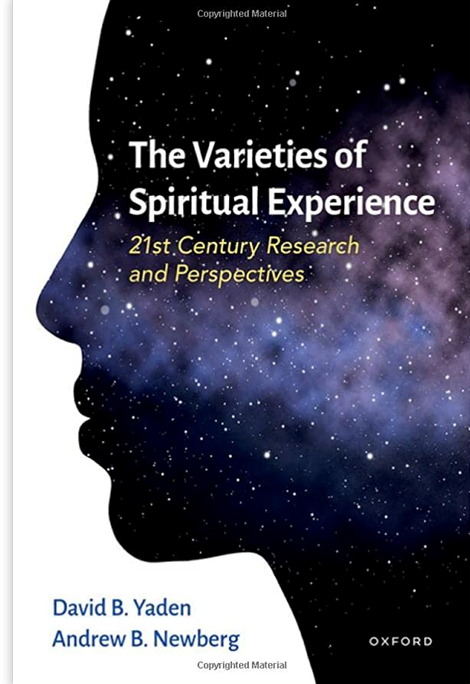 Citation: Yaden, D. B., & Newberg, A. B. (2022). The Varieties of Spiritual Experience: 21st Century Research and Perspectives. New York: Oxford University Press (440 + x pages).
It’s been 120 years since William James published his groundbreaking series of lectures at the University of Edinburgh as The Varieties of Religious Experience: A study of human nature, which brought the study of religious experiences within the purview of science. Since that time, there hasn’t been an equally broad consideration of the state of the science of spiritual experience despite significant advances in the field. David Bryce Yaden and Andrew B. Newberg bring the field squarely into the modern day with The Varieties of Spiritual Experience: 21st Century Research and Perspectives. Combining current neuroscience and psychological research together with intensely personal descriptions of spiritual experiences, the authors manage to create a text that would work simultaneously as a graduate textbook and as an introduction to those with a non-academic curiosity about the physical and psychological underpinnings of these spiritual events that are so fascinating to the general public.
The book is broadly broken into three sections. The first lays out the case for a science of altered states and grounds itself in the history of James’s work and then brings us up to date on the general science of how the brain responds to spiritual experiences and how we might go about differentiating them from the pathognomonic signs they can resemble. The second section examines different varieties of spiritual experience, such as numinous (supernatural), revelatory, mystical, or paranormal, and for each it lays out the current state of our understanding of what may be involved in the experience. The third section addresses applications of the field, such as long-term changes in personality and behavior that have been described following very brief spiritual experiences and how spiritual experiences may be related to psychedelic experiences.
Throughout, the book harkens back to the quote they draw from James’s thoughts on hypnosis (but that they argue apply equally to spirituality) when he wrote that it was “high time that a…phenomenon which had played a prominent part in human history from time immemorial should be rescued from the hands of uncritical enthusiasm and charlatanry and conquered for science” (p. 26). Like James, they start with the assumption that we can’t know for certain whether the phenomenon we describe as spiritual are, in fact, from a higher or different source, but that despite that challenge, we can’t avoid studying these experiences that have drawn so much attention and reverence through the years. Indeed, their own research and other national polls suggest that about 30 percent of the population reports these experiences.
They base their approach on a profound respect for the subjects’ experiences and steer clear of passing judgment on their ultimate meaning. They also recognize, however, that this compromise of study without attributing cause is unlikely to be fully satisfactory to those of great faith—whether in a divine reality or that nothing divine exists—both orthodoxies with strong opinions about the utility and wisdom of studying these experiences. By linking their work to an exhaustive array of research in neuroscience, psychology, pharmacology, religious studies, and philosophy, the authors provide strong support for the further study of this field in the future.
One aspect of their approach that might prove frustrating for some readers is that they ground their discussions of whether these experiences are pathological or not largely on their impact for the individual, rather than exploring further the impacts they may have on those around them. While this approach harkens back to the “pragmatism” that James encouraged, in the present day it can dismiss the pain of those who have experienced harm and injustice in the name of a spiritual experience or belief. To their credit, I expect that the authors would be sympathetic to this point, based on their sensitivity to the cultural impact on the experience of each subject, although it isn’t specifically discussed.
Whether you bring only a casual curiosity for what modern science has to say about spiritual experiences or decades of academic knowledge about the latest work in how the brain and spiritual experiences interact, this book will offer you a deep well of thought and research to further your study and future questions that will hopefully lead to another book like this before the next century.