

In the end, we will remember not the words of our enemies, but the silence of our friends.― Martin Luther King, Jr.
Courage, the quality of mind or spirit that enables a person to face difficulty, danger, pain, etc. without fear and more often than not, in the face of fear: bravery. Because humanistic psychologists are particularly sensitive to uniquely human dimensions, such as experiences of creativity and transcendence, and to the quality of human welfare, courage lends itself to every experience and becomes the substratum upon which Heidegger’s “Being” rests. It was courage, that in the face of death, during World War II, millions of Jewish people and perceived enemies of the Nazis were sent to their deaths in concentration camps. Upon hearing about these atrocities, a 39-year-old veteran of the Polish-Soviet War and member of the resistance, Witold Pilecki, volunteered to be imprisoned at Auschwitz to secretly collect intelligence and then escape. While in the concentration camp, Pilecki was responsible for informing the Allies of the atrocities of Auschwitz and organizing a resistance movement. It was courage that allowed Harriet Tubman, a born slave, to escape slavery and risk her life to free over 300 slaves while working as the conductor of what was called “The Underground Railroad.” It is courage that allows us to not avoid or flee fear but rather embrace it. And it is courage that will uphold us in these changing times and enable us to continue the march for the betterment of humanity.
Being terrified but going ahead and doing what must be done — that's courage. The one who feels no fear is a fool, and the one who lets fear rule him is a coward. ― Piers Anthony
Love, an antithesis of fear, in that we would rightfully deduce that loves opposite is “hatred” and yet with further inquiry, hatred more often than not derives out of fear. There is no fear in love, but perfect love casts out fear, because fear involves torment. He that fears is not made perfect in love (1 John 4:18 NKJV). Although difficult to define, we can delineate from the countless examples of what love is what it isn’t — bigotry, hatred, discrimination, prejudice, etc., against which love has no tolerance. Realizing that we are in a powerful and strategic position, we must embrace love and not be overcome by the air of hatred plaguing the 21st century. From the words of Martin Luther King, Jr., “Darkness cannot drive out darkness; only light can do that. Hate cannot drive out hate; only love can do that.” Predicated on core values — including caring and commitment, trust and realistic understanding of the complexity of people, as individuals, in groups, organizations and community — love (a peaceful conquest) and that unconditional, ought to be the motivating factor of the Society for Humanistic Psychology in its efforts in pursuit of what we all would like to realize — a just community.
“Above all, love each other deeply, because love covers over a multitude of sins.” – 1 Peter 4:8
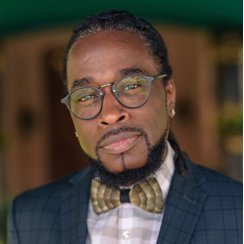
Nathaniel Granger, Jr., PsyD.
President
Div. 32 (Society for Humanistic Psychology)
About the Author
Nathaniel Granger, Jr., PsyD, president of Div. 32 (Society for Humanistic Psychology), is an adjunct faculty at Saybrook University. He serves as an editor of University Professor’s Press and treasurer of Rocky Mountain Counseling and Psychological Association (RMHCPA).