

 Dear Members, Affiliates and Associates of the Society for Humanistic Psychology,
We have completed three full years now with APA Journals, in just our first two years of collaboration we have for the first time been able to participate in profit sharing: approximately $20,000 in 2016 and $40,000 in 2017. What makes possible these royalties are primarily the downloads of articles from electronic data bases typically provided to academics and students by their universities, as well as from those who pay to download directly from the APA journals website. I wanted to begin my update with the good news about this new source of income for our Society, since this will help us to underwrite many of the Society's expenses in the coming years, while adding significant funds to our "nest egg."
When I first joined the Div. 32 executive board in the early 1990s, we had very little in the way of savings. Around the time that Art Lyons became our treasurer, I served on the finance committee, and we decided as a board to begin putting aside funds for the future whenever possible. There were no royalties from the journal at that time, as the division struggled to finance the printing and mailing of the journal, using what was available from our dues and subscriptions. At that time the journal was self-published by the division under the stewardship of our first editor, Christopher Aanstoos, who deserves the credit for first upgrading our division newsletter from a paper newsletter (whose Volume 1 was published in 1973) to a bulletin (with Volume 13, 1985) and then quickly upgrading once more to a division journal. Chris served not only as editor but as copy editor, typesetter, and publisher of the journal for around 15 years.
Through 2003, the division journal continued to be self-published, until in 2004 we secured a publishing contract with Taylor and Francis, which was right after we merged the journal Methods: A Journal for Human Science (for which I had served as editor since 1989) with The Humanistic Psychologist (THP). The merger occurred as a way of increasing the number of issues per volume from three to four, thereby making us more visible in abstracting services (which prefer journals with four or more issues per year). I served as associate editor of the "new" THP beginning in 2003, producing two of our four issues per year until I was appointed interim editor by our president David Rennie at our midyear retreat in early 2006; then in the summer of 2006, at the convention in New Orleans, the board asked me to assume the position of editor-in-chief.
Returning to the issue of royalties, I would like to urge all of our members in SHP, national as well as international, to please be sure that your institutions are subscribing to the journal, whether independently or through a bundled subscription to APA journals. But even more importantly, please go into your institutional library portals and download articles. And whenever possible, when using in classes, have your students and colleagues go through those same portals to download copies of individual articles (rather than forwarding personal copies), because the more downloads we generate, the higher our royalty payments will be each year, and this is quickly becoming our bread and butter.
In the forthcoming issues for this year and next, there will first be a special second issue devoted to a 50th Anniversary celebration of Transpersonal Psychology, guest edited by Rosemarie Anderson. Later there will be a special issue guest edited by Harris Friedman on human-animal Interaction. At this year's convention, Div. 32 is sponsoring a "Summit on Animal Justice" that I will co-chair and which began two years ago in Div. 34 (Environmental, Population, and Conservation Psychology), for which Harris and I had each presented posters. The idea of these special issues, a new development that goes beyond the "special sections" with which our readers have become familiar, is to expand the outreach of the journal by attracting submissions from others whose work connects to these special themes.
In 2020 we plan to produce our first "special double issue" with APA journals, under the guest editorship of Belinda Siew Luan Khong of Australia, who has been a faithful contributor, guest editor and supporter of the journal for many years now. The issue will be devoted to mindfulness, to be generally informed by some of the Buddha’s most important teachings, “The Eightfold Path” and “the Three Pillars." Anyone wishing to contribute to this special project can reach out to Belinda directly via email.
Finally, I am working with past president Donna Rockwell to begin organizing a special issue of the journal celebrating the women of humanistic psychology. When Connie Fischer retired from Duquesne around five years ago, she and I discussed the need to recognize the contributions of those who had often remained in the background, and in particular, the many women who have devoted their lives to this movement. After witnessing Donna's steadfast devotion over the years to recognizing women's contributions, while helping to advance the presence of women at all levels within our Society, I reached out to her to take the lead in developing a special issue for the journal, co-edited by Vanessa Brown, PsyD, which would hopefully appear by the end of 2020.
It has been my distinct pleasure to serve as your editor, and to work hard over the past three years in particular to transition to our new home at APA journals, a move that I felt was necessary to help legitimate humanistic psychology within the APA while providing the journal with the validation that comes from its presence within the family of APA journals. I look forward to my continued involvement with the journal, as well as with the executive board.
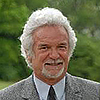
Scott D. Churchill
About the Author
Scott D. Churchill is currently professor of psychology at the University of Dallas, where he has previously served as chair and founding director of its masters programs in psychology. A fellow of the American Psychological Association and past president of Div. 32 (the Society for Humanistic Psychology), he was recently re-appointed as editor-in-chief of the division journal, The Humanistic Psychologist. As Council Representative for Div. 32, Churchill co-authored and was primary mover for the 2015 resolution to revise all of APA’s policies on torture and to explicitly call for the removal of military psychologists from GITMO and other unlawful detention settings — unless they are providing treatment to military personnel. This resolution also served as the impetus for changes to the APA Code of Ethics.
Churchill became a member of Div. 32 in 1984 and began serving on the Executive Board in 1992 in various capacities: awards chair, membership chair, human science research chair, finance committee, bylaws committee chair, president, journal editor, liaison to APA's Science and Education Directorates and Council Representative.In 2013 the Society for Humanistic Psychology (SHP) presented him with its Mike Arons and E. Mark Stern Award for Outstanding Lifetime Service to the Society for Humanistic Psychology. In 2014 he was co-named with the University of Dallas psychology department as recipient of the Society's Charlotte and Karl Bühler Award for Significant and Lasting Contributions to Humanistic Psychology.
Churchill is currently president-elect of APA's Div. 24 (Society for Theoretical and Philosophical Psychology).