

Hello everyone. I am delighted to have this opportunity to share a brief account as well as my perspective regarding the need for diagnostic alternatives. It is long past time to relinquish a reductionistic diagnostic system that endeavors to situate psychology in a framework of psychopathology, carving out its own niche in the medical model paradigm. This move has always struck me as clinical psychology’s awkward and adolescent attempt to “shove in” and be like the cool kids to gets its share of respect and a big slice of the insurance reimbursement pie. Sadly, as a consequence of that endeavor, the general public never gets to see the intricacy of psychology’s roots in philosophy, art and spirituality. Moreover, the medical model is in reality much less applicable to what we regard as mental health than our field likes to pretend — arguably best (if not solely) suited for mental health challenges secondary to disease and injuries. Other aspects of human experience, such as our propensity for storytelling and mythmaking, afford more potentially universally applicable frameworks for more richly understanding these challenges and for working as healers to address what we now generally regard as mental illness.
Sixteen years ago, I tried my hand at teaching after 12 years of clinical practice, which included a four-year term of services as a U.S. Air Force psychologist. In 2004, I decided to supplement my income by teaching an introduction to psychology course at Elmhurst College, an undergraduate institution, and a forensic psychology course at my graduate school alma mater, The Chicago School of Professional Psychology (TCSPP). I never anticipated that I would love teaching so much, and I subsequently took on a regular adjunct teaching gig at both institutions, teaching lifespan psychology and abnormal psychology courses at Elmhurst and developmental psychology, social bases of behavior, cognitive-affective bases of behavior, biological bases of behavior and a slew of different courses in forensic psychology at TCSPP. In 2006, I became core department faculty in the counseling department at TCSPP, where I worked until 2017.
Almost three years ago, my career underwent a significant transformation. My little family and I moved to Wisconsin, and I shifted to teaching exclusively online through TCSPP, and for the better part of two years, I have been teaching and doing administrative work as psychology chair of the Humanistic and Clinical Psychology Department at Saybrook University. Saybrook is a bastion of humanistic psychology, where I revel in not always feeling like the eccentric faculty member at a mainstream institution, one of a very few advocating for non-reductionistic approaches to psychotherapy. I retain adjunct faculty status at TCSPP through connections with their online international psychology program. In contrast with Saybrook, I always have my work cut out for me in encouraging students there to entertain alternatives — particularly humanistic ones — to traditional diagnostic systems.
However, this semester, the cabin fever arising from immersion in online department chair work and teaching prompted me to accept an offer to teach a Social Foundations of Clinical Psychology course at a local brick-and mortar institution in Wisconsin, just to get me out of the house one night a week for a few weeks. On my first day, I wondered if these first-year clinical psychology graduate students knew that they were about to get a version of this course that would be strongly grounded in critical psychology. I wondered how they would react to a long list of critiques of the DSM-5 in connection with the topic of mental health stigma in addition to traditional list of advantages of such diagnoses. I wondered if they would be able to entertain the inherent misogyny of the Borderline Personality Disorder diagnosis and concepts such as hysteria? Would they understand and be able to reflect on concepts of cultural humility as an anodyne to rampant insensitivity to diversity in many traditional diagnoses? Could they discern clinical psychology’s indebtedness to indigenous traditions in endeavors to understand that divide, as well as the need to envision new approaches that honor our humanity? Most of all, would they see a way clear to seeing human beings as part of larger ecosystem — even beyond the scope of traditionally defined boundaries of social psychology, understanding that the richest assessment of our challenges lies in studying what is wrong with our relationship with the natural world?
The answer turned out to be yes — they can handle it all. In fact, they — the youngest group of graduate students that I have ever taught, who are undertaking their fledgling steps into the major theoretical paradigms of clinical psychology — do not seem to even need an exposure to humanistic psychology to understand what is wrong with business as usual. These students have grown up in a world that is in intense political and ecological turmoil. I am astonished about how hungrily they embrace critical psychology.
While I realize that my N of 15 students is far too small to fully justify a conclusion that the paradigm shift is coming, I nevertheless feel it in the awe that is shaking out of my being in response to the next generation, who are very ready to implement what we boldly dare to envision here.
Thank you.
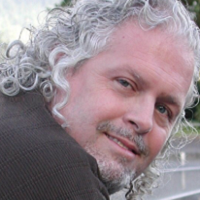 Drake Spaeth, PsyD, is the psychology chair of the Humanistic and Clinical Psychology Department at Saybrook University, a position he has held since June 2018. Before serving as president of Div. 32 (2019-2020), he previously served on the Board of Div. 32 as Continuing Education chair. He is an alumnus of The Chicago School of Professional Psychology, where he also served as faculty for 14 years. He worked as adjunct faculty for Saybrook from 2015-2018. He is a former USAF psychologist, serving as a psychology resident at Wright-Patterson Air Force Base and as a behavioral health psychologist and Chief of Inpatient Psychology at Lackland Air Force Base. He has also worked as clinical director of a residential treatment center for adolescents and in numerous, diverse clinical and counseling center settings. Spaeth has published articles and book chapters and presented at numerous conferences in the areas of trauma, spirituality, spiritual emergencies, depth psychology, ecopsychology, existential living and rites of passage.