

I am grateful for the time I have been granted to serve as president of our Society for Humanistic Psychology this past year. I turn over this role into the hands of Gina Belton, PsyD, as your new president for 2022-23. I wish her—and Division 32—all the very best. I will serve out this next year as past-president and am open to help in any way I can. As I exit, I want to leave behind on the desk a brief note on cautions and aspirations for the division’s future—which, I think, in terms of guarding the soul, are of lethal importance.
Caution #1: The supremacism of deficit-correction, rank-ordered scales of worth, and efficient pProduction
Humanistic psychology is founded on betterment of lives and actualizing potentials. It gives us hope and inspires. The flip side of these values is exactly what is killing others unless they can crawl into “therapeutic care” (a phrase slowly becoming an oxymoron to me, as has “clinical psychologist”). Deficit-corrective engineering inherently stigmatizes and is life denying; it leaves one with a chronic “never-enough-ness”—and, hence, chronic disappointment—in the wake of ever-receding transcendence. Purity cult influences on the goal of symptom alleviation are stronger than ever and are accompanied with equal ferocity by the pressure of commodification for patient/client and therapist alike: We are only valuable if we efficiently produce the elimination of symptoms, but in doing so, erase the pathos of life. As long as difference is seen in any way as deficient, we will never offer an alternative to supremacist ideology. An alternative? A heeding companionship and clearing for ANY way of being in the world, as it is, in its own way, without needing it to be anything other than what it is. Then what? The very question shows how hard it is to “be” with what “is.” Unless we do, we will forget what it is like to be with “what is” unfettered by what should be. No wonder we are empty. No wonder antidepressants have increased 400%. No one is with what is. Let’s provide an opportunity for this to happen.
Caution #2: Algorithmic reduction
We are in the age of the machine—and, by that, I don’t mean in an age of technological gadgets. Like it or not, we are post-humanistic, meaning existence is no longer human-centric. Ray Kurtzweil, in Transcendent Man, warned of approaching “singularity” in the near future where we will be replaced by artificial intelligence and robotics. I say singularity is already here in how we enframe ourselves as data-bytes and algorithms and expect others to follow suit. We are reduced to “nothing but” algorithmic programs, code, “if this, then this”—erasing uniqueness and diversity in a tsunami of genericity. We are reducing the other’s uniqueness through coding it in some form of sameness needed by the code writer (to paraphrase Levinas). Levinas’s face has become exchangeable, transplantable, replaceable, taking on the fixedness of existential Parkinson’s. An alternative: Let’s highlight the ontological complexity of life. There is no such thing as a generic anything unless it has been decontextualized, and thus, colonized. Let’s offer a diversity of another kind of singularity than Kurtzweil has in mind. The singularity I am suggesting listens beyond objectifying categories and classifications and looks to the birth of phenomena out of the womb of particular contexts.
Caution #3: Quarantine
The final caution/invitation has to do with where we belong in this world and echoes the difficulty of coming out of a pandemic quarantine and back “out there.” We have to be cautious of interprofessional and transdisciplinary isolation among ourselves. One of my teachers at Union Seminary, Tom Driver, used to quip, “Theologians are like manure: Spread out widely they fertilize beautiful things that bloom. If placed all in one pile together, they stinketh!” I would say all more the case with humanistic psychologists, if we are not careful. And the stench will come from a surprising source: Self-congratulatory virtue signaling—and hence, back to an unwitting supremacism. I am concerned that the diversity of ideologies is waning in Division 32. There are vast differences among us, let alone between us and those outside of Division 32. If what we believe is what we do, and we believe in diversity, well, can those who are exclusive, dominant, violent, unjust, or unethical, find solace with us? Do we know that every time we sign a statement of protest we are also being exclusive? The diversity among what we mean by existential is a conversation far from being finished. Can transpersonalists or those not from Saybrook, EHI, or either the Chicago or Michigan Schools of Professional Psychology sit at the table with us? Strangely, of all the groups I have encountered over 34 years of practice in eight states and 15 countries, and in three professional disciplines, I have felt the warmest reception among humanistic psychologists—and yet I have feared being condemned the most by humanistic psychologists. I don’t think I am alone. Perhaps it is my privileged fragility fearing confrontation about my privilege. But maybe more is going on. The Taoists have a proverb: Evil begins when the good person enters the room.
I honestly don’t know how we will survive as a human race without humane, intimate, and nurturing relationships being at the heart of any situation, profession, discipline, or practice. Over this past year, I have suffered significant loss in my own life—and, nonetheless, have tried to hang in there with you. One thing for sure has become crystal clear to me: nothing matters more to me than the beauty of intimate encounters, of any sort, anywhere, with anyone or anything. This intangible is a different kind of evidence of the heart and is the wind that blows where it will, of which we hear its sound, but of which we do not know from where it comes or to where it goes. Nevertheless, let’s clear space for its coming. Thank you and see you... out there.
About the Author
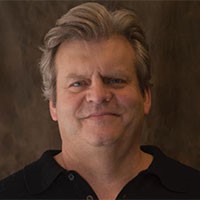 Todd DuBose, PhD, outgoing SHP president, is a Distinguished Full Professor at the Chicago School of Professional Psychology, where he is the coordinator of the concentration in humanistic-existential and other human science orientations in psychology. He is a licensed psychologist with over 30 years of clinical experience, 11 years as a former chaplain, and 17 years as a teacher, supervisor, and consultant in local, national, and international venues. He holds advanced degrees in the integration of continental philosophy of religion and human science psychology.