

I have served the public as a licensed and board-certified psychologist for almost 50 years. My experience in the field is built on a background of spiritually-focused and humanistic values and training. My formal training was from New York University, where I received a PhD and was privileged to work one-on-one with an icon in humanistic and social psychology, Isidor Chein. His orientation was humanistic and spiritual in the sense that he focused on the well-being of every human being and their essential nature. His approach was to address each individual as a unique human being and seek how to engage them for their optimal development. My life prior to and during this training was in the context of a monastic order under a vow of poverty, which engendered a focus on the nature of spiritual development toward the realization of the Soul and, for me, the direct connection to the vibration of God.
In the years that followed, as a licensed psychologist in New York, Florida, South Dakota, and Vermont, I experienced an infinitely diverse group of people that I teamed up with both individually and in various group settings to create a consciousness of their individually chosen journeys. Each journey within each setting had and has four fundamental components that align with humanistic psychology and the research, development, and teaching of this science and art. First is the recognition that each individual has a potential that can be revealed with proper attention and effort. This potential is revealed in the context of Being with the Other and stepping aside from the limitations or filters that impede this realization. The stepping aside process involves components that are in harmony with nature and the natural surround as well as the cultural derivatives that have accrued from the contact or connection with the natural surround. There is an exploration and discovery process that unfolds as we work together and learn together how these fundamental principles can be applied to the transformation of those limitations that are disclosed as we move forward into the Essence and Soul. This exploration is very much akin to the concept and practice offered by Carl Rogers (1980) as “transcendental empathy,” described in more detail by Tobin Hart (1997).
In both the individual and the group settings, five operational principles are engaged. First is the need for objective or neutral awareness of my inner states and the need for me to listen carefully with discernment and without judgment for the wisdom behind the experiences being shared. Second is the idea of speaking from the Heart of wisdom and knowledge I have gained over my lifetime. Third is the notion of using Silence for reflection, and stillness so that the Voices of wisdom may appear. Fourth is to keep all that is shared as confidential and sacred; and fifth, to use these essences as pieces of the puzzle, creating the whole that is to move forward step-by-step into the peace that is sought after. When I have shared these insights without expectation of how they are received both in the clinical therapeutic context and in the larger group context, I sense that the essence of what our human journey is about becomes illuminated.
Thank you, dear reader, for listening, as I hope this resonates with the meaning of what you perceive humanistic psychology is all about.
References
Hart, T. (1997). Transcendental empathy in the therapeutic encounter. The Humanistic Psychologist, 25 (3), 245-270. https://doi.org/10.1080/08873267.1997.9986885
Rogers, C. R. (1980). A way of being. Houghton Mifflin.
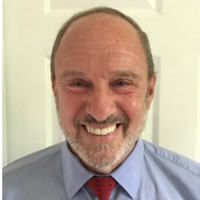 Steven E. Handwerker is a licensed psychologist and Doctor of Divinity. He integrates humanistic, religious/esoteric, and peace psychology principles in his practice, utilizing common core values as catalysts for promoting peace in individuals and groups. His 50 years as a clinical and peace psychologist include work in interfaith group venues, resiliency paradigms for homeland security, and project initiatives for sustainable communities. He is founder and CEO of the International Association for the Advancement of Human Welfare.