

Over the past month, I conversed with six psychologists who represent a broad range of humanistic flavors, including (but not limited to) existential-humanistic, phenomenological, human science, constructivist, and transpersonal. They demonstrate the presence of humanistic education across a variety of settings — some HP- friendly and some less so. Their students are equally diverse, from undergraduate to post-doctoral and from other therapeutic disciplines.
Louis Hoffman
 Louis Hoffman is well known in HP circles, having served in several capacities for Division 32. He earned his doctorate at the School of Psychology at Fuller Seminary and has taught in several settings, including the Colorado School of Professional Psychology, Saybrook University, and the University of Denver. He is a practicing therapist and is executive director of the Rocky Mountain Humanistic Counseling and Psychology Association (RMHCPA).
Louis, we’ll be talking about the challenges to humanistic psychology education as we go forward. What challenges do you see when you consider the content of that education? And how it’s delivered?
When you look broadly at psychology, humanistic and existential psychology are still often somewhat misrepresented. There’s so much misinformation out there that sometimes what we have to do is to first correct all these misunderstandings, to be able to teach what humanistic psychology is. Especially at the graduate level, we often hear that the APA doesn’t want to accredit humanistic programs and institutions — which is both accurate and not accurate. Their job is not to accredit humanistic programs and evaluate the humanistic part. They’re accrediting based on the generalist portion of the program. But we could have a generalist education that is inclusive of a strong humanistic perspective throughout the curriculum, as long as it doesn’t detract from the generalist program.
A bigger problem is the expanding requirements of APA curriculum. What’s required there is getting so broad and it tends to get more and more medicalized all the time. It becomes harder to build on the generalist education because it has become so expansive. Personally, I think the APA should start introducing standards that require greater diversity of perspectives to be taught. Something like 85 or 90% of the faculty at accredited programs identify as cognitive behavioral. We need to make sure that there’s cultural diversity across faculty and placements, and different theoretical perspectives, as well. Otherwise, we’re not promoting creativity in the field.
Another issue that I have found is that when people who have gone through humanistic institutes try to critique mainstream approaches, they sometimes make errors. When our critiques are not valid because they are based on misunderstanding, then other scholars and practitioners won’t listen to our critiques. We have to make sure that our critiques of mainstream approaches are based on a good, accurate understanding of mainstream psychology. We need to help humanistic psychologists learn how to make effective, accurate critiques.
How would you like to see humanistic psychology education delivered or administered?
I go back and forth on that. Sometimes I think humanistic and existential education needs to happen largely outside of the academy. But… I think in a lot of ways that humanistic education is best situated in broad-based programs with one or two strong faculty in that program that are humanistic and existential. That way, students can get the broad exposure to different psychological perspectives and prepare for licensure with the generalist approach that’s generally required. Then hopefully they can get connected to the training programs where they continue to specialize in humanistic and existential afterwards.
When I started teaching at humanistic institutions in the academy, I thought that these were places where we can train people to go out and teach the humanistic perspective at other institutions. I’m not as confident now that that’s happening. Partially because of not getting the mainstream perspective, people may not be situated to get jobs at other institutions — particularly in doctoral programs because a lot of the humanistic programs are not APA accredited. So I tend to be leaning towards the perspective that we should be trying to get faculty into these mainstream institutions. Let’s connect with those training programs where we can give people a good foundation that we can build from, so they can get the degrees and go out and make a difference.
Nance Reynolds
 Nance Reynolds is an existential-humanistic therapist practicing in Oregon. She has a broad background in the arts, social work, and nursing. She received her doctorate in humanistic, existential, and transpersonal psychology from Saybrook University. She is the co-director of clinical training at the Existential Humanistic Institute, where she is involved in the development of new curricula.
Nance, what challenges do you see for humanistic psychology education as we go forward?
Well, I want to clarify that in the work that I do, and in what EHI does, we are blending existentialist and humanistic. And when I look at the biggest challenges for this, honestly, it’s so much about presence. How does one teach presence? How does one teach how to sit with? Or how to listen, in lots of different layers — that’s the art of it. I see the challenge that we are in this very fast-paced and technical life. At EHI, we teach through a few avenues; an in-person retreat, online courses, and video consult groups. There is such a palpable difference when we can sit with students, talking and developing relationships. When we engage with therapeutic work, we can sense when we are congruent, follow the client and discover what is emerging — or what needs to emerge. We can see that nuanced twitch in the jaw that may be missed on Zoom and know there is something more to attend to.
We’re also in a time when people often seem to want to buy a package. “Here’s the package and here is how you do it.” And our work is lots of layers and depth. So when we’re educating people, we’re talking about everything from the felt sense of moving into a session, to how you bracket, and how well you know yourself and where things are hitting you. How do you sense a client in a way that is not othering? It’s not just reading about it, although all the books and essays are helpful. We need experiential practice. As therapists, we need to integrate all that at times, but that doesn’t create the whole. The whole is much more relational. There is no fixing. We move ever so patiently, and methodically, and purposefully toward a way of being that is so integral to a healthy individual. We need a deeper exploration even in a world of limits and insurance and all that.
The world mitigates against all that in many ways. Do you think we can address that?
Yes, I really do. If you look at every art movement, every spiritual movement, every scientific movement, factors came before that pushed it into emergence. I see a longing now from therapists all over who are saying, “Yes. I work with immigrants. I work with sexual abuse and I need something deeper. I work at the VA and, yes, I’m required to do cognitive but I also want to address those existential concerns.” We all have them, asking how we’re isolated and how we can belong.
I just spoke of writing and research not being all of it. Much of it is experiential, even sitting and watching all the videos that Yalom has — taking in that moment. The more we can roleplay, the more we can allow ourselves to be in that felt experience and see what evolves. We lean into something that’s not just predictable; we’re in person as though there were real consequences. Then we pull back and we keep it sacred. We don’t ask first what everyone else thought. We ask, what was that like for you? Moments that a therapist might think never made a difference may be where an opening happened for a client. So we talk about the experience and then we allow the group to talk about what they saw.
Do you think this is happening in mainstream psychology education where people are learning to be therapists?
I don’t know. I hope so. We have been invited to do talks at some mainstream programs. People seemed hungry for something more than checking the boxes of diagnosis. So if you ask my hunch, and this is not a very educated hunch, it would be that many of the mainstream programs continue to be very, very diagnosis-based; the medical model.
But there is a deep hunger. Right now, I’m working with numerous people over 60 and they want a discourse about these deeper levels of being alive. We get psychiatrists from all over who say “I’ve got 20 minutes with people. I can’t just tell them to go for a 30-minute walk five times. I need some depth, right?” When people get to play their clients, they see them through different eyes. How do you create an education for that? Experiential, experiential, experiential.
Getting therapists from different disciplines and backgrounds at EHI is actually unifying. Where does the academic side come in? Perhaps we don’t all need to be core writers. We have our experiential framework, but we do need to share about it. I think we have to keep getting ourselves out there in the world, whoever believes that this is important and wants it to keep being helpful forever. We need to be giving talks, and writing articles, and interfacing with people. Asking how can we complement each other?
Shawn Rubin
 Shawn Rubin is a clinical psychologist practicing in Virginia and the Washington DC area. He received his doctorate from the Center for Humanistic Studies Graduate School, where he studied depth psychologies and contemporary psychoanalysis. Shawn has developed internship and training programs, as well as chairing the clinical psychology program at Saybrook University. He served as editor for the Journal of Humanistic Psychology and has been active in the Society for Humanistic Psychology.
I recall you saying that you had a great experience in your clinical psychology training program, and that such an experience might not be readily available in the academic settings anymore. What are your thoughts on that now?
That’s right. Programs like that came out of the original spirit of countercultural liberation and change movements. It was a kind of graduate program that emphasized the self of the person as the instrument of change. We had several years of experiential learning about self and others through group processes. In every assignment, it was expected that we’d apply the concepts and theories to our own lives and be vulnerable, seeking insights and revelations into our pain and healing. We were working on ourselves every step of the way and developing our empathy and openness. Our research was qualitative and the school’s founder, Clark Moustakas, encouraged us to use his models to study experiences that had been significant, impactful, and transformative for ourselves. Other programs might have seen that as self-indulgent or overly biased, but Clark encouraged us to embrace that and explicate the richness of meaningful experiences.
Existential-humanistic psychologists still fight battles around accreditation or what models should be predominant, and that’s worthy and important. I’m concerned, though, with how we help folks try to navigate lives of authenticity, safety, and growth, in the midst of increasingly fascistic and paranoid hate groups and tendencies. Our models have a lot to say and offer, and a lot to be expanded upon to include valuing Indigenous wisdom from around the world, and LGBTQ ways of being, and advocating for social justice initiatives around equality for women and protecting children. We need to make sure we’re advocating for those groups that are being targeted and oppressed and marginalized. Are we utilizing our approaches to hold spaces for processing pain and trauma, for empowerment? Are we looking at the systems and structures that are in place to perpetuate those issues? I specialize in affirming therapy with gender diverse kids and teenagers, and the protection laws are changing at school boards and the state level. It’s been on my mind a lot how humanistic and existential values and principles of social justice can be more active and contributing.
How could training for advocacy be part of our educational experience?
It’s interesting… I think in some progressive psychology programs students are bringing that to faculties and administrations. Saying, “You’re not really talking about the things we need to be talking about. You’re not thinking that these theories are maybe outdated, or these approaches are not speaking to the contemporary community needs and how we can be agents of advocacy.” Some schools and training programs are being called to account for racist or misogynistic tendencies, where we are trying to honor and learn from Indigenous wisdom and healers.
So, I think that’s a tough road because graduate schools need to be very structured for accreditation. Faculty has to have certain credentials and students have to meet certain criteria to receive credit. And APA often too narrowly dictates what those requirements are. How can you become progressive and evolve in an institution-bound program where they have to check off boxes — when society is changing so quickly and the needs are changing so quickly? If humanistic, existential, and transpersonal psychology means to meet these evolving needs, it's best done in independent training institutes. When a training program receives requests around a certain issue or concern, to meet a certain need, they can respond quickly and offer those courses. When students can inform and shape the design of their programs and curriculum, programs will necessarily have to be responsive and hire a diverse faculty that identifies with different theoretical models and areas of specialization.
I attempt to impart a very broad-based liberation psychology — facilitating insights and growth from the inside — but then what are the external oppressive factors that people may be facing? That begs the need for a lot more support at a psychological and community level. Again, academic institutions may not be set up for that. If schools are preparing psychologists for this very overwhelmed, traumatized, anxious post-pandemic and climate-catastrophic world, academia can’t be insulated, safe and walled off. They have to be open and receptive in a dialectic between the real world and what’s being offered. An ivory tower just won’t meet the needs of anyone.
Does anything else come to mind around the idea of preparing future humanistic psychologists?
I don’t question whether the doctoral level of clinical psychologist is important for certain specialties. But when it comes to frontline therapy, I think that can be learned with depth and integrity in preparation at the Master’s level. I’ve often referred people to Master’s in Counseling programs because I feel like they do a great job of teaching all the most important ideas — which are, by the way, integrative, person-centered, and developmental. I think the training is quite good to get people out into the world doing the good work, with the right intentions.
Eugene DeRobertis
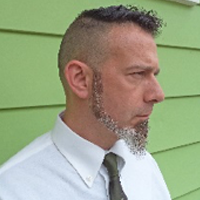 Eugene DeRobertis has been a professor of psychology since 1996. He teaches at Brookdale College and Rutgers University in New Jersey. He received his doctorate from Duquesne University. In addition to his teaching, he worked for a number of years in human services. He has authored books in humanistic, phenomenological, and developmental psychology, some with the intention of integrating humanistic psychology into mainstream psychology education.
I’ve generally been asking about the main challenges for humanistic education as we move forward. You teach at a mainstream institution and work with undergraduates, so I’m curious about your perspective and your experience in that sort of setting.
I imagine that people’s teaching experiences are very different when they have the opportunity to work at an institution where they have colleagues who share the same general background. I’ve taught at five different campuses and I’ve never worked with anyone who would describe themselves as a humanist. So just the sheer isolation has been kind of difficult. I’ve been teaching primarily undergraduates and only some of them go on to graduate school. It’s kind of like operating like a splinter cell, not really knowing or seeing if you’re making headway or having an impact.
Another thing that has become increasingly difficult over time is what I am perceiving to be the decreased preparedness of students as they come in from high school, and then from the 2- year to the 4-year level. The high stakes testing kind of approach has forced teachers into a predicament where they’re teaching tests and producing standardized knowledge. I tend to think of humanistic psychology as something that thrives when there’s authentic dialogue, with people relating and connecting to it in a deep way. When students are nervously concerned with what they need to learn for a test, it’s not a good environment to soak in humanistic and existential sorts of ideas. For example, a thing called the Lampitt bill required the 2-year setting to become laser-focused on just getting the fundamentals to prepare students for their 4-year. So, previously, I could design specialty courses like a personality course that included humanistic psychology — and I wrote a textbook for it. But the course is now faced with extinction.
That’s an interesting point. When I think of humanistically-oriented programs, they’re all graduate programs. What is the point at which humanistic education should actually start?
You know, I saw so many of the people I was graduating with heading out to be clinicians, or wanting a job at a 4-year institution with a big name or something. I went right to ground zero; places with diverse students, some of whom couldn’t get into college. I’m trying to get them as soon as they’re out of high school. I’ve always felt that humanistic psychology hobbled itself by allowing itself to be considered an advanced topic. It took itself out of the running to be on the front end as part of your introduction to the field itself. There’ll be a blip in the introduction about Rogers or Maslow, but the other dimensions of humanistic psychology and its variants, such as phenomenology, are considered advanced topics. We do need people to get in the trenches and get with students right after high school. Otherwise, they’re getting the picture that this is not fundamental. There would be no greater contribution than for a group of really good existential-humanistic scholars to commiserate on a good, solid intro to psychology textbook. They would be proficient in all the topics of a standard textbook writer but could see that humanistic psychology was represented in a more pervasive way. That was sort of the
brilliance behind the idea of the humanistic psychology 101 text that Richard Bargdill and Rodger Broomé edited. The challenge is how am I going to cover all the bases that my institution, my chair, and the discipline consider to be fundamental? For the good of the discipline, and the good of humanistic psychology, we have to be able to show that we are proficient and can do all the things everybody else can, but we’re doing something more. I mean, if Laura King can make an intro book that’s widely known to be an intro book with a positive psychology bent to it — and that’s considered acceptable — why couldn’t we?
For me, the question has always been to protect our strongholds and then infiltrate those areas where we’re not represented. So I volunteer to teach personality, or a history of psychology class, or a clinical class. I volunteer to teach those courses straight away because I know we will be represented. But when they ask if someone wants to teach a standard sensation and perception class, I do that too. When we’re doing theories of emotion, they don’t cover phenomenological theories of emotion… but I’ll make sure I talk about it by the end of the intro, or include descriptive phenomenology with all the standard research methods. You don’t have to get too deeply into it, but it should be on their radar. Try to lead by example and hope that other people will do the same thing.
Derrik Sebree
 Derrick Sebree practices clinical psychology in the Ann Arbor area. He received his PsyD from the Michigan School of Psychology and holds certification in multicultural counseling. He is especially interested in mental health relating to multicultural identity and ecopsychology, with a commitment to social and environmental justice. He is a core faculty member and MA program director at the Michigan School of Psychology. He serves on the board of directors for the Society for Humanistic Psychology.
Derrick, based on your experience and perspective, what challenges do you see for the future of humanistic psychology education?
That’s a great question right now because, as the Master’s program director here at the Michigan School, we’re getting ready to really make some changes — because APA is getting ready to accredit Master’s programs. Typically, APA accreditation tends to focus on creating a standard across programs, and we have to back up whatever our own standards are… relying on our own procedures and policies. I think creativity in education is a very core humanistic principle, calling us to authentic expression and bringing in the expertise or experience of the instructors. The challenge is going to be how to continue to provide a humanistic experience and education and, meanwhile, also have to answer to the more standardized terms of higher education.
Does that lean on the whole issue of the evidence base?
Yes, when a program is accredited, every so many years they have to do a self-study, reporting where you’ve been sticking to your standards. Where have you deviated, and what was the reason? It has to come from some root and from best practices, right? So back to the evidence base.
The whole issue of standardization is huge. It seems counter to the humanistic tradition — we’re not in that space of one size fits all. We’re having to literally reframe how we as humanistic practitioners and educators are approaching our own pedagogies. So how do we meet our own principles and our most important aspects while granting that, yes, people do deserve a certain quality of education and the opportunity to have the same kind of gross experience.
How would you like to see us reform ourselves to meet that?
Well, we have our humanistic tenets, so it’s about making sure those are realized. It makes me think of the difference between the spirit of the law and the letter of the law. We’ve been focused on the letter for a very long time in the field. I think we really are moving now into thinking about how we interpret that, because the world is changing and we have to change with it. You can’t be rigid while the world is changing because it’s going to leave you behind. We don’t want to be in a position of saying our way is the right way, but I think that’s kind of the way it’s been coded for a long time. Now we’re in a space where we can, I think, be part of the mainstream psychology piece. Humanistically, we have very strong praxis; a strong foundation in the way we organize our view of people. That is because we focus reflexively on the depth of the interpersonal relationship. So… I think we’re in this space now where the psychology mainstream has come around to this place on its own.
In APA publications, I often notice an emphasis on science and the empirical. What do you see that makes you feel like the mainstream is evolving to be a little bit closer to humanistic psychology?
Well, that aspect of psychological science does show up. But the other part that we’re also seeing is the advocacy side showing up more. I think that’s where it’s starting to come out. They are seeing that you can’t just have science be a verb. You can’t just do science and then wonder how you apply the science. It’s more like, how do you ground the science for the betterment of people’s lives? We may end up seeing more focus on the differences between people’s lived experiences — because that determines what kind of care someone needs and how effective that care is going to be. I think humanistic psychology has a chance to brand itself behind those pieces; the importance of lived experience to providing quality integrated care.
Because of the focus on human experience, I think humanistic psychology is uniquely situated to be a voice in multiple areas. So many of our national and global stressors, like climate change, and so forth… we can say, this is my lane. As time moves forward with many of these changes coming up, there will be a space for us to be more vocal, to be willing to engage in these dialogues.
Nisha Gupta
 Nisha Gupta is an associate professor of psychology at the University of West Georgia, where she works as an arts-based phenomenological researcher, creativity scholar, and liberation psychologist. She received her doctorate from Duquesne University, where she trained as a clinical psychotherapist. She has a particular interest in research about the lived experiences of psychological and sociocultural phenomena relating art to community healing. In her work, she embraces the creative process as a vehicle for building solidarity across difference, evoking empathy and compassion, and fostering joy and empowerment.
Nisha, you’re at a university that has long been supportive of the humanistic orientation. How do you see the future of humanistic education, and what is it like to come from your particular type of institution?
I’m the interim head of the Master’s psychology program at West Georgia right now, which really emphasizes our humanistic roots. I’m sitting in on a lot of student comprehensive exams as they’re leaving. When they’re asked about what they got out of this program, many students speak about learning to cultivate a certain kind of presence as a human being, which I think gets to the core of humanistic psychology. We can lose sight of that — what it actually means to be in the world as a person with other people. So what I see as most important to hold onto in humanistic education is the teaching of presence. What does it mean to teach an empathic presence, a loving presence, a soulful presence that leads toward human growth and potential, personally and collectively? I think we need to make sure that core teaching of presence is embedded in everything we do as humanistic educators — that we, as professors, try to model that as much as possible, this humanistic presence, ethic, and values.
There are a couple of challenges to that at this point in our history. One of them is the rise of online teaching and education, which higher education is moving toward across the United States. My biases are toward face-to-face teaching because I think about Carl Rogers’s encounter groups. One of the things I love about West Georgia is its preservation of that spirit of the encounter group in our classrooms. How do you teach that kind of presence, and what is the virtual analog of that? These are important questions to think critically about. Do we have to fight to preserve face-to-face presence? And at institutions where online teaching is becoming a push, or where it is already mostly online, how do we facilitate online pedagogy that teaches a similar humanistic presence in how we relate to one another in digital communities?
The second factor I see as a challenge in trying to nurture humanistic presence is capitalism. There’s a push to make sure that higher education quickly leads to jobs for students. To a degree, that is important and inevitable in the world we live in. But what concerns me is the focus on career ambition overstepping a more spiritual ambition or emphasis on spiritual growth. It becomes important to focus on what we’re actually teaching in our humanistic classes, as we teach people how to become therapists, teachers, and researchers. Are we emphasizing doing (like skills and techniques) at the expense of being (such as presence)? This emphasis on spiritual ambition and growth, and balancing doing and being, is also a transpersonal matter. So it becomes important to hold onto the transpersonal aspects of humanistic psychology, too, which West Georgia does so well and which I appreciate about our particular program.
How do you think that kind of training or education would be best administered?
One way to administer that is to just maintain a very specific intentionality regarding the values of a program. For instance, at Duquesne, I was trained to become a clinical psychologist in an APA-accredited program that was based on mostly existential-phenomenological thought. Even despite all the APA requirements, that department was very intentional in preserving a way of being and a kind of presence that is phenomenological at its roots. I was learning all these diagnostic categories and clinical techniques, but what I really learned was how to actually listen to the subjectivity of my clients. That was the number one value that seemed to be intentionally cultivated and prioritized across all the classes I took — how to cultivate a kind of phenomenological presence in the world that emphasizes empathic listening to the subjectivity of the other. This may have gone against other dominant models being taught in clinical or counseling programs, where administering CBT-type clinical interventions and making diagnostic assessments foregrounds the ability to listen to and honor clients’ subjectivity with a hermeneutics of faith. So I think that if a program is very clear and consistent about its values across its entire curriculum, then it can preserve the teaching of humanistic presence, even in the context of APA requirements. But it has to be an intentional preservation, with an understanding that you can’t take it for granted because it’s being constantly eroded by the pressures of our world.
Another value that I think humanistic psychology education should cultivate is theoretical solidarity-building. For instance, our program at West Georgia is based on humanistic psychology, but our curriculum also emphasizes critical and transpersonal psychology. Instead of thinking of these theoretical approaches at cross purposes, we should point out their very clear and obvious overlaps in how we teach psychology. For instance, when it comes to the overlaps between humanistic-existential and critical psychology, I have always seen Carl Rogers as an activist. He spent much of his later life trying to figure out how his encounter group system could heal societal divides. Rollo May was also an activist who wrote extensively about existential psychology as a vehicle with which to fight authoritarianism. At West Georgia, there’s a fundamental understanding of how humanistic, critical, and transpersonal theories work together and are in service of one another, though they might emphasize different things or have different types of literature. So, I think theoretical solidarity-building is the future of a humanistic education.
 Julie Falk graduated from Saybrook University’s doctoral program in humanistic, existential, and transpersonal psychology with a strong interest in the therapeutic aspects of narrative. She has taught Mindfulness-Based Stress Reduction for more than a decade, along with life story courses, mindful movement, and the practice of Focusing. She chairs the Behavioral Health Task Force for her county in Pennsylvania as well as the CE committee for Division 32. She is the co-editor, with Louis Hoffman, of Becoming an Existential-Humanistic Therapist: Narratives from the Journey.