

After several years “away” from the Division, working in more traditional arenas, I’ve been reflecting on how humanistic psychology has been expressed as a fundamental value in all my work, even when the connection is not obvious on the surface. Andrew Bland, PhD, asked me to take this on at an interesting time, as a series of mid-career professional transitions are taking me from 15 years of Community Engagement activity at the Medical College of Wisconsin—working at the neighborhood level in diverse communities and with US Military veterans—back to traditional clinical work as a staff psychologist in the VA system. Simultaneously, I’ve gradually been “coming home” to the Society for Humanistic Psychology over the last few years, re-engaging with conferences and colleagues who were instrumental in helping me find my way as a young professional 25 years ago. With the recent death of Tom Greening, for example, I am reminded of a brief phone call I had with him when I was stuck trying to decide which graduate program to attend. And, all these years later, now working to guide students and young professionals toward a humanistic approach, regardless of their particular professional path and specialization. I hope that this reflection continues what I view as a key dialogue around the utility and need for humanistic psychology outside of the walls of our own Division and how we work to speak with and engage with the world beyond the academy.
My journey toward humanistic psychology started when I was very young. I can remember in the late 70s there was a copy of Carl Rogers’ On Becoming a Person lying around on a coffee table in the house, along with stuff from Alan Watts, Krishnamurti, Sufi poets, Albert Camus, and so on. Although I did not fully understand it at the time, through my parent’s journey and their own difficulties, I was steeped in the language of a humanistic and existential worldview. Graduating college around 1999 from the University of California system, I was sitting around in my apartment thinking, “Wow, man, what was all that about?” I had naively expected to be given a foundation that would prepare me for clinical work and that might be open to ideas coming from a client-centered view. I was trained by some great people, but the perspective was an almost mechanistic view of psychology. After graduating, I just worked for about four years and started searching for other ways of thinking about the human experience. Somewhere in this process, I found Division 32 and, most particularly, the famous—or infamous—Division 32 listserv.
For several years, I just talked to some of the people who I will lovingly refer to as the Old Guard remotely through the listserv— folks like Mike Arons, David Elkins, Tom Greening, Mark Stern, and many others. As the conversations became more serious for me, some of the debates became deep enough philosophically that I worked with Harris Friedman and Mike Arons (Franco et al., 2008)—and, later, with Brent Dean Robbins, Friedman, and Chad Johnson (Franco et al., 2018)—to publish articles that basically attempted to capture the tenor of these discussions in a more enduring form. Finally returning to graduate school for a clinical degree in 2003, I was invited to engage as a student representative to the Division’s board.
Among many experiences as a graduate student learning from this attachment to the board, one of the most memorable was a protracted debate in the board about the idea of transitioning from a Division to a Society. While one might suggest that the nuances of this would only be lost on the non-academic world, the split seemed particularly meaningful to me. Looking back, I am sure that I did not understand all the nuances around the history of the division, the journals associated with the division, and the implications of these considerations. Harris Friedman and a few others seemed concerned that becoming a Society might water down the academic discussion. Others, David Cain first among them, seemed to suggest that this engagement with the broader, non-academic world was just what humanistic psychology needed to stay relevant in a changing world. At the time I found myself deeply persuaded by the argument that we would lose something fundamental to our identity as a set of scholars if we transitioned to a more open Society format.
But, over the years, the sense that the intention of becoming a Society actually spoke to foundational ideas in the humanistic tradition started to take a deeper hold on my own thoughts. Engaging with a broader range of individuals outside the walls of the academy might indeed bring a breath of fresh air to this work. Over time, I found myself convinced that not only should the name be changed, but that our work should change, too. And in that spirit, I began to set a very different course for myself. On the surface, this course could be seen as moving away from the Division.
In 2003, I became one of a handful of graduate students selected by the U.S. Department of Homeland Security for a research fellowship, and the only student in clinical psychology working with DHS. Notably, my wife-to-be was not super happy about “dating the enemy.” She was afraid I was going to become a spy. But, in reality, I began working on issues around disaster and crisis response, working from the premise that psychology has a lot to offer in terms of improving disaster management efforts—thus, using psychological science to prevent or minimize trauma exposure, rather than simply treat it (Beutler et al., 2007; Franco et al., 2009). Ultimately, I guided a group of students to a successful American Psychologist publication on how psychology could be applied to events like Hurricane Katrina (Gheytanchi et al., 2007). In this process, I was working at the short-lived National Center on the Psychology of Terrorism, a joint effort between Palo Alto and Stanford Universities that was one of the early responses to the terrorist attacks of September 11, 2001. Through this work, I became increasingly interested in the psychology of maverick actors—individuals who take initiative when others fail to—and I sent a draft paper to Philip Zimbardo, PhD one of the Center’s faculty. Zimbardo was excited about this work because he was simultaneously examining the flip side of the psychology of evil, the actions of heroes, as a capstone to his career. Zimbardo and I went on to publish about seven papers on heroism, the most important of which was probably our initial work, Heroism: A Conceptual Analysis and Differentiation Between Heroic Action and Altruism (2011). Although largely theoretical, it also summarized a massive online survey effort examining implicit theories of heroism held by the general public and offered some deeper quantitative analysis suggesting that individuals’ perception of the heroic actor taking on unjustified risk is an important factor in attributing heroic status beyond physical peril. While I was excited about this, it seemed to me that heroism also connected to humanistic ideas: somewhat paradoxically, around self-actualization (the hero often expresses their fullest and most capable self in a moment of action) and transcendence of self (whether physical or social heroism, a form of death, injury or diminishment is always present). Either someone pointed out to me, or I stumbled across, Frank Farley’s earlier work on “Big H and little h” heroism in the 1980s and this allowed me to more clearly ground future work on heroism in the humanistic tradition. Frank and I discussed his earlier work in more detail. From there, I was able to highlight the provenance of ideas to ones offered by the Society in a more recent review article on heroism (Franco et al., 2018).
In fact, this review article was part of a special issue on Heroism and the Human Experience that I undertook as a guest editor for the Journal of Humanistic Psychology at the request of Shawn Rubin with later ongoing support from Sarah Kamens as she took over the editor role at the journal (Franco & Efthimiou, 2018). In preparing the forward to this special issue, I also took some time to explore the connections between Joseph Campbell and the Society—finding that, in 1972, Campbell attended the International Transpersonal Psychology Conference in Bilfort, Iceland. Moreover, in discussions with the Campbell collection librarian at Pacifica Institute, it became clear that Rollo May and Joseph Campbell were routinely interviewed together on radio and television in New York.
This work on heroism ultimately led to the suggestion that heroic acts create a moment of sublime self-actualization for some individuals, in work that I have related to the Greek idea of eudaimonia (Franco et al., 2016). As a result of these efforts on the social psychology of heroism, one of my colleagues and I were approached by the Journal of Genius and Eminence to be part of a special issue dedicated to Joseph Campbell’s work (Efthimiou & Franco, 2017).
My interest in disaster and heroics was a natural fit for clinical training in PTSD, and I spent time on rotations at the VA hospitals in Menlo Park, California and Milwaukee, Wisconsin. As I started a faculty appointment at the Medical College of Wisconsin (MCW), I began a 15-year journey exploring the idea of Veteran Community Engagement, publishing a number of papers on a community/academic partnership with Dryhootch, a non-profit organization serving veterans. Ultimately, this work led me to work again with Sarah Kamens to put together a special issue in JHP with the overly long title: Veterans’ Health and Well-Being—Collaborative Research Approaches: Toward Veteran Community Engagement (Franco et al., 2021).
Throughout this decade-and-a-half of engaged work, I was also interfacing more and more with communities of color in Milwaukee, one of the most segregated cities in the US. Through that process, I became increasingly interested in how the academy communicates (or does not communicate) science in dialogue with the communities we say we want to serve. Working with the MCW Office of Community Engagement, I supported a team that began a series of Science Café dialogues, engaging African American and Hispanic residents and non-profit service organizations with bench scientists (Ahmed et al., 2017). Because of this community engaged work, I was asked to serve as the site Co-PI for the All of Us research program at MCW. All of Us is one of the largest genomics and precision medicine initiatives being undertaken in the world and is funded by National Institutes of Health. The idea of ensuring the broadest possible representation in the genomics data set is underscored by the name of the program, but achieving this is easier said than done. Communities of color still have enduring mistrust of large governmental health research despite decades of efforts to rectify these problems. A large part of my work over the last 5 years has been simply going out to communities (in person, through African American and Hispanic radio, through bilingual TV advertising, etc.) and working to communicate the importance of ensuring representation, that the program is safe, and that the rights of individual participants will be protected.
This work in communities of color became incredibly important during the COVID-19 pandemic, and I spearheaded aspects of my institution’s COVID response at a community level. We transitioned from routine activities to working with a set of community health workers (CHWs) to deliver masks, tens of thousands of pounds of food, culturally and linguistically-adapted public health information, and hope in some of the toughest early days of the pandemic. Later, this set of community health workers was instrumental in communicating to their neighborhoods about the importance of the vaccine. The CHWs worked closely with me and the City of Milwaukee Department of Public health to bring vaccine clinics to trusted non-profit partners in areas of the city that were not being as effectively reached through hospital- based efforts.
I have not published much (at least yet) on these last two endeavors. It has seemed important to try to serve first and worry about the publications later. And, while it is not immediately apparent, this work in community engagement with underserved people has been governed by both a humanistic perspective and, also specifically, by this years-old debate on whether we should be a Division or a Society. My wife has sometimes asked me, “Where does this humanistic thing fit in?” and my response has always been that it underpins everything I do. In fact, by being less present for the last few years of our Society’s meetings, I’ve been trying to live out its mission.
Author Bio
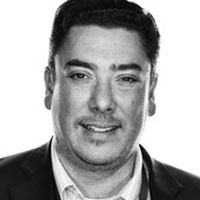 Zeno Franco is an associate professor in the Department of Family and Community Medicine at the Medical College of Wisconsin. His research focuses primarily on improving strategies for community-based participatory research (CBPR) with U.S. military veterans and communities of color in the Milwaukee region. He currently serves as site Co-PI for the nationwide All of Us research program at MCW, funded by the National Institutes of Health. Franco was recently recognized for his collaborations with the community on health disparities and access issues through the MCW President’s Award for Community Engagement and the Society for Humanistic Psychology’s Carmi Harari Early Career Award.
References
Ahmed, S. M., DeFino, M., Connors, E., Visotcky, A., Kissack, A., & Franco, Z. (2017). Science Cafés: Transforming citizens to scientific citizens—What influences participants’ perceived change in health and scientific literacy?. Journal of Clinical and Translational Science, 1(2), 129-134.
Beutler, L. E., Reyes, G., Franco, Z., & Housley, J. (2007). The need for proficient mental health professionals in the study of terrorism. Psychology of Terrorism, 32-55.
Efthimiou, O., & Franco, Z. E. (2017). Heroic intelligence: The hero’s journey as an evolutionary and existential blueprint. Journal of Genius and Eminence, 2(2), 33-44.
Franco, Z. E., Blau, K., & Zimbardo, P. G. (2011). Heroism: A conceptual analysis and differentiation between heroic action and altruism. Review of General Psychology, 15(2), 99-113.
Franco, Z. E., & Efthimiou, O. (2018). Heroism and the human experience: Foreword to the special issue. Journal of Humanistic Psychology, 58(4), 371-381.
Franco, Z. E., Efthimiou, O., & Zimbardo, P. G. (2016). Heroism and eudaimonia: Sublime actualization through the embodiment of virtue. In Handbook of eudaimonic well-being (pp. 337-348).
Franco, Z., Friedman, H., & Arons, M. (2008). Are qualitative methods always best for humanistic psychology research? A conversation on the epistemological divide between humanistic and positive psychology. The Humanistic Psychologist, 36(2), 159-203.
Franco, Z., Hooyer, K., Ruffalo, L., & Frey-Ho Fung, R. A. (2021). Veterans’ health and well-being—Collaborative research approaches: Toward veteran community engagement. Journal of Humanistic Psychology, 61(3), 287-312.
Franco, Z., Zumel, N., Holman, J., Blau, K., & Beutler, L. (2009). Evaluating the impact of improvisation on the incident command system: A modified single case study using the DDD simulator. Proceedings of the 6th International ISCRAM Conference, Gothenburg, Sweden.
Gheytanchi, A., Joseph, L., Gierlach, E., Kimpara, S., Housley, J., Franco, Z. E., & Beutler, L. E. (2007). The dirty dozen: twelve failures of the Hurricane Katrina response and how psychology can help. American Psychologist, 62(2), 118.
Robbins, B. D., Friedman, H. L., Johnson, C. V., & Franco, Z. (2018). Subjectivity is no object: Can subject-object dualism be reconciled through phenomenology? International Journal of Transpersonal Studies, 37(2).