

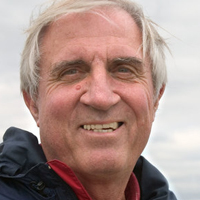
 When we put out a call for submissions related to healing the divisions that exist between people and groups, Al Galves, PhD offered some information about a study he has been involved with that explores a divide in the way governmental and humanistic psychologists approach research and funding. Intrigued by this, and curious about what it might say about the potential for societal and individual healing, I met with him in October to learn more. This dialogue reflects the discussion Al and I had about the study of funding by the National Institute of Mental Health (NIMH).
Julie Falk: Al, what is the mission of NIMH, and what is the importance to mental health of how it spends its research monies?
Al Galves: They say that their mission is to transform the understanding and treatment of mental illness through basic and clinical research, paving the way for prevention, recovery, and cure. It’s a pretty important mission and they spend $2.3 billion a year. That’s nine zeros! They’re one of the largest funders of research in the country, so how they direct their funding has a major impact on university psychology departments and eventually on the treatments that help people with the prevention and recovery from mental illness. Their choices also help to crowd out some approaches and favor others, and that makes a difference.
Julie: Tell us a little about how your study came to be and how it was put together.
Al: I’ve wanted to do this for a long time because of all my reading about research and also from reading what NIMH puts out about its own work. In their own documents, it’s pretty clear that the NIMH has been taken over by neuroscientists. I think that’s going down the wrong path, but I wanted to find out more. I put out a call to various divisions of APA and to other relevant organizations, looking for volunteers to help with a study. NIMH has a very good website from which you can get a lot of information about every study they fund, some of which are extramural studies and some of which are intramural. There are complete abstracts and you can read the amount of money that was spent on each. We used a random number table to pick 20% of the studies that were conducted in the years 2012 and 2020.
Julie: What made you focus on those two years?
Al: Well, in the period between those two years, NIMH adopted what are called the research domain criteria, which was an attempt to become more reductive, more scientific, and—in their view—more defensible. So we wanted to see what difference this made. We developed a skip logic coding sheet and did extensive training with our volunteer coders, as well as a test run of the coding. Finally, we coded our 20% of studies for those two years and analyzed the results.
What we found, Julia, is that about 75% of NIMH money is spent on studying the brain and genetics—basically, on physiology. In terms of trends, NIMH spent 72% on physiological studies in 2012, and that increased to 75% in 2020. In comparison, in 2020 the NIMH spent only 14% on studies of treatment and only 4% on studies of treatment with psychotherapy. The other treatment studies were studies of physiological treatment such as medication, electroshock, and transcranial magnetic stimulation. We also learned that the NIMH spent very little on studying suicide (4% in 2020) or on the impact of culture, ethnicity, gender, or sexual orientation on the process of psychotherapy (4% of the amount spent on studying psychotherapy in 2020). You know, those are the areas that are of interest to clinicians, and to patients, right?
Julie: What are the implications of that?
Al: Well, the implications are that their research portfolio is harmfully unbalanced and is not likely to enable them to fulfill their mission—to pave the way for prevention, recovery and cure of mental illness. You know, Thomas Insel, who was the executive director of the NIMH for 13 years admitted that. He said, “When I look back on that, I realize that while I think I succeeded in getting lots of really cool papers published by cool scientists at fairly large cost—I think $20 billion—I don’t think we moved the needle in reducing suicide, reducing hospitalizations, improving recovery for the tens of millions of people who have mental illness” (from “Thomas Insel and the Future of the Mental Health Systemopens in new window”).
You know, studying the brain and genetics is not going to help human beings in the foreseeable future. Physiological treatments are not good treatments for mental illness. They don’t address the causes of mental illness. Mental illnesses are how people are reacting to their lives and their life situations, and to concerns they have about their lives and themselves. For example, depression is what happens when people lose something valuable—a person, a sense of adequacy, safety, well-being―or when they have deep concerns about their lives. Good treatment helps people use their thoughts, emotions, intentions, perceptions and behavior to live the way they want to live. Physiological treatments can’t do that. So here’s the deal. The NIMH is funding efforts to use materialistic science to understand and treat human beings. But it is impossible to understand and help human beings through materialistic science. As philosopher E. I. Schumacher says: you can understand the brain through materialistic science. But you can’t understand life, consciousness, or self-awareness through materialistic science. The NIMH is studying the brain. But human beings don’t use their brains to live their lives. They use their minds to live their lives. And the mind is not the same thing as the brain. The brain is an organ. The mind is a vastly powerful faculty which we use to do everything we do―understand the world, make decisions, solve problems, build machines and technology, and interact with other human beings. In his book Mind and Brain: A Critique of Cognitive Neuroscience, neuroscientist William Uttal argues that neuroscientists think they have a theory of how the brain creates the mind. But, he says, they aren’t even close to having such a theory and are unlikely to ever have one.
Julie: What could we do differently?
Al: The NIMH could use the scientific tools of phenomenology to study how humans use their minds, emotions, intentions, perceptions, and behavior to live their lives. It could accept the fact that the experiences of human beings can be an object of scientific inquiry. It could use phenomenology to study how different methods, forms, and approaches to psychotherapy help people learn how to use their thoughts, feelings, intentions, perceptions, awareness and behavior in healthy ways.
Julie: Thank you so much for sharing this information about your study with us, Al. It’s such an important and impactful topic. We hope you can find a home for it in a journal and in the media so that it can be shared beyond our own community, and we’re very pleased to be able to introduce it here.