

 This article was prompted by the Division 32 call for a special issue on “generational perspectives on humanistic psychology.” What better way to consider the topic, perhaps, than to ask the views of Division 32’s past presidents? It was my great pleasure to invite at least one of our presidents from each of the past five decades beginning in 1980 to 2020 to contribute a paragraph reflection to this article.
A bit about me: I first became involved in humanistic psychology as an undergraduate at Oberlin College. As a humanities major, I savored the creativity of the greats and the diverse innovators in music, literature, and art. That said, several events led to my shift to psychology and a desire to better understand real human beings and their motivations, beliefs, and actions—among them, missing taking the doomed PanAm Lockerbie Flight 103 by about 24 hours on my way home from a semester studying immigrant literature and culture in London. In my final college semester, in my first psychology course, the professor required student participation in faculty research; being ethical, an alternative option was provided to being a participant in a behaviorist professor’s learning study. Not wanting to feel like I was being turned into a machine, I leapt at the chance to read a book by Carl Rogers. Smart decision! I soon discovered Rollo May’s Love and Will and Cry for Myth on my own, great bridges from literature to psychology. It was awesome to find out May had attended Oberlin! I then earned my doctorate at the University of Chicago, where Rogers had served on faculty, and collaborated there with the late Mihaly Csikszentmihalyi in his humanistically influenced mixed methods work in creativity and on the peak, optimal experience he termed “flow.” But enough! On to the reflections of our past-presidents! Enjoy!
Stan Krippner, 1980 Division 32 President
In my 1974 Association for Humanistic Psychology (AHP) presidential address, I scored mainstream psychology’s record supporting racism, sexism, ageism, homophobia, and child abuse, giving examples from the “official” literature, especially psychology texts. I also noted that mainstream psychology had not used the available scientific data to urge reforming draconian marijuana laws that resulted in imprisonment of numerous young people, and other literature that advocated psychoactive drugs for children with learning disabilities. I urged psychologists to do more to assist traumatized Vietnam War veterans as well as those war resisters who had fled the country. I supported the Women’s Liberation Movement, lamenting the small percentage of women who went on to attain advanced college degrees and the Gay Liberation Movement that fought discrimination against homosexuals, bisexuals, asexuals, and transexuals (now known as “transgender” individuals). A prominent psychologist had attacked humanistic psychology as being too dependent on literature and not biology, and I responded that there was considerable wisdom in literature especially regarding values, and that psychology could not be value free. I cited a political slogan at the time, “If you are not part of the solution, you are part of the problem,” and asked if psychology was not part of the problem?
In a follow-up article for the AHP newsletter a few years later, I spoke of a “Psychology for the Year 2001,” reminding readers that humanistic psychology began as a corrective to both psychoanalysis, with its emphasis on pathology, and behaviorism, which neglected subjective experience. I urged humanistic psychology to address a variety of crises, such as the ecology crisis (noting the deterioration of the natural environment), the population crisis (observing that the majority of the world’s people were poorly fed, housed, and clothed), the energy crisis (citing mass consumption of oil, coal, gas and similar fuels to the neglect of alternatives), and the legal crisis (notably the constant wars, revolutions, and acts of terrorism). I paid special attention to the education crisis, marred by racism, sexism, and, to use my exact words, “violence in schools.” Finally, I wrote about the reality crisis, where altered states of consciousness introduced other perspectives on reality that needed to be addressed. On a positive note, I urged humanistic psychologists to address these issues because mainstream psychologists had long neglected them.
Fred Wertz, 1994 Division 32 President
When I think about my presidency in 1994, what first comes to mind is the notorious Template for Psychotherapy Validation that was issued by APA's Society for Clinical Psychology (Division 12) that year. That document proposed the experimental method—randomized controlled trials (RCTs), as the means to "validate" effective psychotherapies. The implicit agenda was not only to invalidate unstandardized therapies (such as virtually all the humanistic therapies), but to establish the RCT as the preeminent, indeed the only, method for researching psychotherapy. We were well-prepared to issue a critical response and did so immediately, intensely, passionately, and compellingly through the 1990s in our convention programming and publications. The leaders of our Society developed our own guidelines for psychotherapy that utilized all scientific knowledge, including not only the full spectrum of quantitative methods but many qualitative and mixed methods. Our guidelines highlighted our long-standing humanistic vision, including the focus, values, and goals we share with those we serve. We highlighted the depth and complexity of experience, the collaborative psychotherapeutic relationship, the dignity and self-actualizing potential of every person in therapy, and the importance of confronting and struggling against the oppressive and pathogenic aspects of our society. We formed alliances with many other APA Divisions, such as the Society for Psychoanalysis and Psychoanalytic Psychology (Division 39). We won the attention of the APA and representation on the Blue Ribbon Presidential Task Force that worked on the problem. APA abandoned the "Template" and its language of "validation" in its first official policy statement, published in the American Psychologist in 2006, outlining the principles of what came to be called "Evidence-Based Practice." This important article suggested that psychotherapeutic practice is a stool that rests on three legs—scientific evidence, the expertise of the therapist, and the patient's preferences, meanings, values, and goals. The article openly admitted that legitimate experts disagree about how to weigh the various kinds of research evidence, but it continued to place the experimental method at the top of the hierarchy, which we continued to criticize in our presentations, publications, and participation on APA.
In the next decade, when I began to serve on the APA Council of Representatives in February 2017, APA proposed its first Clinical Practice Guideline (CPG), for the treatment of PTSD, following the directives of APA's Advisory Steering Committee (ASC). The proposed guideline surprised and outraged me and the entire coalition we had formed because it followed the standards of the Institute of Medicine and was based exclusively on the systematic review of RCTs, with no mention of other scientific methods, the clinician, the alliance, or the patient. At that time and since then, we have continued the struggle against guidelines based exclusively on the medical model. Our critiques and positive proposals have led to the emergence of a series of "professional practice guidelines" (PPGs) for work with persons of diverse cultures, various sexual orientations, disabilities, and PTSD. And yet APA's CPGs have proliferated with unchanged methodology, even in the 2025 revision of the CPG for PTSD. This most recent CPG took our criticisms and suggestions into account by acknowledging the PPGs, the limits of the IOM standards, and even more diverse research methods that inquire beyond symptom reduction, into quality-of-life outcomes, the collaborative therapeutic alliance, and patients' preferences and goals. As a council representative, I voiced the same objections I expressed in 2017 to APA's continuing adherence to the medical model and its mere lip service to the concerns of humanism. Although I voted against the new guideline, it was approved by almost 90% of the Council. The struggle continues! We now have representation on the APA's ASC, which continues to determine the form of CPGs, and we are gaining increasing influence on APA guideline development. The most recent statement of the ASC (see Advisory Steering Committee statement on the evidentiary bases of clinical practice guidelines) explicitly acknowledges "biases against diverse psychotherapy orientations, scientific methodologies, and their findings." The ASC implored all and pledged itself to respect the values of approaches to therapy and research that have been excluded from previous CPGs. It advocated respect for and the funding of qualitative research and psychotherapeutic work based on diverse values, goals, and epistemologies. We humanists continue to participate in APA, to call out and protest psychology's old and new forms of inhumanity wherever and whenever they arise, and to advocate for the transcendence, dignity, and self-determination of the persons we serve. We are all in for the long haul!
Scott Churchill, 2004 Division 32 President

For those of us entering both the APA and Division 32 in the 1980s, our goal was to make a place for ourselves within the family of divisional interests, not only as an independent division within the APA, but for the purpose of advancing the idea of psychology as a “human science,” to complement the existing paradigm of psychology understood as a natural science.
In the mid-1990s, I had attended year after year of the Science Directorate Leadership Conferences in Washington as liaison for both Divisions 32 and 24, in order for us to have a voice in planning the annual “Science Weekend” program at the annual conventions, and it became clear to me fairly quickly that our colleagues in the more mainstream APA divisions had little interest in recognizing qualitative research as anything but an embarrassment—and as an obstacle to the promotion of psychology as science. During my presidency, I addressed the APA Council with a New Business Item for “philosophical and methodological diversity”—an idea that the Education Directorate took up a year later with their 2005 Leadership Conference on Diversity that featured epistemological, cultural, and organizational diversity, in that order. I thought we were making progress, and I began chairing sessions at APA conventions on the theme of epistemological diversity.
The decade of the 1990s had been named the APA’s “Decade of the Brain,” and it was soon followed by the “Decade of Behavior” in the 2000s. However, when qualitative research began to appear in APA journals, the APS pushed back, complaining that “introspection” and “self-reports” on peoples’ thoughts, feelings, memories, and attitudes were now “crowd[ing] out all other forms of behavior,” thereby undermining psychology as a science of behavior (see “Psychology as the Science of Self-Reports and Finger Movementsopens in new window.”) It wasn’t very long before we in Division 32 were being advised to stand down on our criticisms of the APA’s overemphasis its status as a STEM discipline because STEM sciences were beginning to make grants available supporting the education of women and minorities. That’s when I realized that the APA was becoming more diverse regarding ethnicity and gender, but not at all with regard to our philosophical and methodological identity.
From the time of my presidency into the next decade, the APA was beleaguered with the ethical issue of military psychologists participating in torture during interrogations. I was present in 2007 in San Francisco as substitute Council rep for Division 32 when we voted and passed what we thought was the most airtight statement against torture that any profession had ever issued. Alas, the devil was in the details, and it turned out our policies were undermined by our citing DoD definitions of torture, which I helped to revise with the help of several activists and colleagues within Council. In the aftermath of the APA's infamous "Hoffman Report," our Division's New Business Item #23B at the August 2015 convention resulted in a 157-1 landmark vote to prohibit psychologists from ever participating in illegal interrogations, with a resulting change in the APA Ethics Code.
No one faults us for our humanistic values. The thing that we are still fighting is the perception others have of us as too carefree and lacking in rigor. We can expand our membership to be more inclusive, but the “bottom line” from the point of view of legitimacy is going to be whether we are holding ourselves up to high enough standards of rigor and expertise, both in our professional self-assessment and in how we actually carry out our work as practitioners and researchers.
Louise Sundararajan, 2010 Division 32 President
There is a deep connection between Division 32 and the indigenous psychology (IP) movement around the globe. This is because humans’ existential concerns constitute a major driving force behind the IP movement. I have written about the existential and humanistic dimensions of IP (Sundararajan, 2019, in press). Another past president, Scott Churchill, sensed another connection between Division 32 and IP, in that both are concerned about epistemic diversity. Churchill later added an international section to the flagship journal of the division, The Humanistic Psychologist. During my presidency in 2010, I established and chaired the Indigenous Psychology Task Force. Both initiatives continue to thrive today.
References
Sundararajan, L. (2019). Indigenous psychology. In L. Hoffman, H. Cleare-Hoffman, N. Granger, Jr., & D. St. John (Eds.), Humanistic approaches to multiculturalism and diversity: Perspectives on existence and difference (pp. 153-166). Routledge.
Sundararajan, L. (In press). Indigenous psychology. In L. Hoffman (Ed.), APA handbook of humanistic and existential psychology (Vol. 2: Clinical and social applications). American Psychological Association.
Kirk J. Schneider, 2015 Division 32 President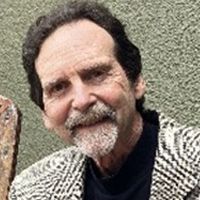
I think humanistic psychology is at a crucial crossroads. On one hand, we're as important as we've ever been in this cultural ethos of quick fixes and easy answers. We bring a reflective, whole-body experience to the questions of what deeply matters to people and how they (we) can pursue what deeply matters. We are also in mounting demand in addressing cultural and political divisiveness and the need for "emotionally restorative relationships." These are relationships where people feel heard and seen and that get at the roots of their problems. Our publications, such as the new Handbook of Humanistic and Existential Psychology, Evidence-Based Foundations of Existential-Humanistic Therapy, and the third edition of Existential-Humanistic Therapy, as well as an array of recent videos and books on Existential-Humanistic Therapy and Supervision through the American Psychological Association Press is evidence of the growing interest in our philosophical and therapeutic approaches to well-being. On the other hand, the "calculative model for living," coupled with increasing computerization and monetizing of psychotherapy appears to be conspiring to dismantle humanistic approaches across child-rearing, educational and work settings, governmental and deliberative milieus, and even religious and spiritual venues where an "us/them" approach predominates. This is why like-minded colleagues, and I have called for a Corps of Depth Healers to offer affordable, accessible, and emotionally restorative relationships throughout our society. There is no time to waste if we are truly to be a global resource.
Drake Spaeth, 2020 Division 32 President
I ruefully acknowledge, with appreciation for the irony, that the most important thing I accomplished during my presidency of Division 32 was the decision to cancel our annual conference, which was to take place in New Orleans. In late February, and even early March, the decision was an agonizing one—only clear in hindsight that it was the correct one. I hope that it saved some lives and prevented misery. New Orleans ultimately proved to be nearly a hotspot for COVID-19. I mention this because it highlights the existential concerns of the 2020s, when it seems like global, ecological, political, and social justice concerns are coming to a head in a way that has been unprecedented in our lifetimes! If there are times we are made for, they are now! It is imperative that we fully embrace Carl Rogers’s early vision of human beings as pro-social, and we thoroughly and authentically embrace the relational nature of the self. It is no longer sufficient to strive for self-expression for its own individualistic sake. We heal ourselves through social means, collectively. As Dr. Theopia Jackson has wisely said, we are not, as is commonly stated, all in the same boat. We are in the same storm. The pandemic and all that has followed in its wake has illuminated in a harsh bright light the inequities among us in access to resources for healing, survival, and thriving. The invitation here—indeed, one of rapidly growing urgency—is to dig deep and imagine together how we as humanistic and existential psychologists can transform the social paradigms that have engendered loss and trauma on a nearly unfathomable scale. How can any of us claim with any integrity to be whole and free while any of us languish in suffering and invisibility?
Conclusion
I hope you enjoyed reading these reflections as much as I did! I’ve known Stan Krippner for 30 years, initially in the context of cross-cultural work I was conducting on trance, possession, and other altered states, later publishing in and on books he has edited on diverse healing modalities. I first encountered Fred Wertz via his work valuing epistemological diversity and continue to utilize his oeuvre when I teach quantitative, qualitative, and mixed methods research methods courses and in supervising doctoral students. Scott Churchill and I are currently co-editing a book on Human-Animal Interactions. Louise Sundararajan and I first collaborated about 10 years ago, when I was teaching in Cambodia for a year and then in India. Kirk Schneider and I have been involved in bringing humanistic perspectives to peacebuilding and international groups towards engaging viewpoint diversity and depolarizing rival factions towards respectful points of understanding. Drake Spaeth and I met recently when we discovered we were both on faculty at Saybrook University!
There are many insights to be gleaned from our past leadership, from the role of both scholars and practitioners to the value of epistemological diversity, to the limits of “business as usual” psychology, and to the role of humanistic psychology in understanding diverse social and cultural changes over the decades, to name but a few. These accounts surely indicate that humanistic psychology in many ways has made contributions to psychology and to society above and beyond our numbers. How humanistic psychology will impact psychology more generally, and positive social change going forward, remain unanswered but exciting questions. Looking to the future, I hope that humanistic psychology will have a great impact on not only the treatment of clinical conditions, but also on teaching at all levels, and on building a global community. Our presidents will continue to play a critical role in shaping the mission of our Society.