


 2018 has proven itself a year of surprise wins for federal children, youth and families policy. Key reauthorizations and new laws are covered elsewhere in the newsletter by our colleague Angelique Day. The additional, late-breaking, critical piece pertains to enactment on Friday, March 23 of Public Law 115-141opens in new window, the Consolidated Appropriations Act, 2018.
This federal spending package puts into stark relief the differences between a president’s budget and what funds Congress ultimately decides to commit to operation of the government. The cliché is that the president’s budget isn’t worth the paper it’s printed on. That said, it still outlines the president’s policy priorities, even if they carry little sway.
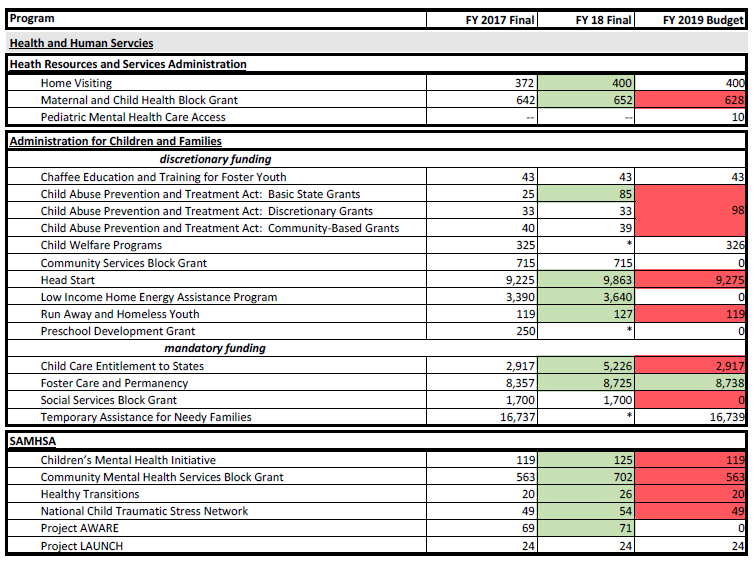
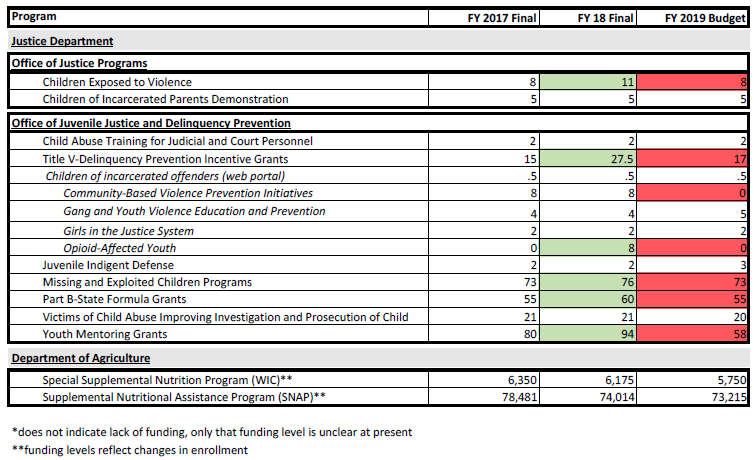
Below are comparisons between federal funding for federal fiscal years (FY) 2017 and 2018 and the president’s FY 2019 budget request. Increases are indicated in green, decreases in red. The Bipartisan Budget Act of 2018, Public Law 115-123opens in new window, raised spending caps on domestic discretionary spending by $128 billion, and you can see the increase across many programs between FY 2017 and FY 2018.
APA has been active with the Children’s Budget Coalition, and we are extremely pleased to be able to highlight the increased funding for key child- and family-serving programs Congress was able to secure.